




Call Us Now
Phone:
+86-137-2797-2500 
Views: 0 Author: Site Editor Publish Time: 2026-06-28 Origin: Site
Custom drinkware represents a highly retained promotional asset. You want attendees to use your gift long after the event ends. Poor material selection or cheap printing methods often damage brand perception instead. Securing the right Stainless Steel Cup requires careful planning. Planners constantly navigate strict minimum order quantities. They worry about print durability. They try deciphering confusing material grades. Doing all this without overspending can feel entirely impossible.
We designed this guide to fix those exact problems. You will explore a procurement-focused breakdown for your next big project. You will learn how to specify, evaluate, and order custom drinkware effectively. This framework covers everything from insulation dynamics to strict vendor evaluation. You can apply these principles immediately for corporate events, massive trade shows, or premium client gifting.
Event drinkware projects fail due to poor planning. You must define success criteria early. Start by evaluating audience alignment. Consider their perceived value carefully. High-ticket corporate events require premium items. VIP retreats demand high-end finishes. You should prioritize double-walled tumblers here. Select styles featuring powder-coated exteriors. These finishes resist fingerprints effortlessly. They convey luxury immediately. They feel substantial to the user.
Now consider a completely different scenario. You might plan a massive outdoor festival. You need to handle high footfall efficiently. You must distribute items quickly. Evaluate single-wall, stackable pint cups instead. They offer excellent budget efficiency. You can transport them easily. They stack neatly behind crowded distribution booths. They keep beverages cold during busy outdoor sessions.
Budget mapping requires thorough thought. Many planners just look at the base unit cost. This is a common mistake. You must calculate the total landed cost. Your budget must cover artwork setup fees. It must absorb costs for multiple print colors. Dimensional weight shipping also plays a huge role. Drinkware boxes take up massive space. Shipping carriers charge based on volume. Model these costs accurately before seeking stakeholder approvals.
Timeline constraints dictate your customization options. Standard production takes time. You must approve a digital proof first. After approval, allow 10 to 15 business days for manufacturing. Shipping adds more transit days. Rush orders significantly limit your options. You might have to use local, on-hand inventory. This restricts your choice of vessel colors. It also limits available printing methods. Plan early to keep all options open.
Choosing the right printing method determines durability. When you customize a Stainless Steel Cup, you have three primary technologies to evaluate. Each method serves a specific purpose.
Laser engraving delivers extreme durability. It offers a distinctly premium feel. The mechanism is straightforward. A specialized laser strips away the outer powder coating. This reveals the bright bare metal underneath.
Screen printing focuses heavily on color accuracy. It remains highly cost-effective at massive scale. Machines apply ink directly to the metal or coated surface.
UV Digital printing handles complex designs beautifully. Printers apply full-color digital ink directly to the vessel. They cure it instantly using ultraviolet light.
| Customization Method | Best Use Case | Durability Level | Color Capability |
|---|---|---|---|
| Laser Engraving | Premium VIP Gifting | Permanent (Dishwasher Safe) | Monochromatic (Bare Metal) |
| Screen Printing | Mass Giveaways | Moderate (Hand-Wash Only) | Exact Pantone Match |
| UV Digital / Full-Wrap | Complex Brand Campaigns | Moderate to High | Full-Color / Gradients |
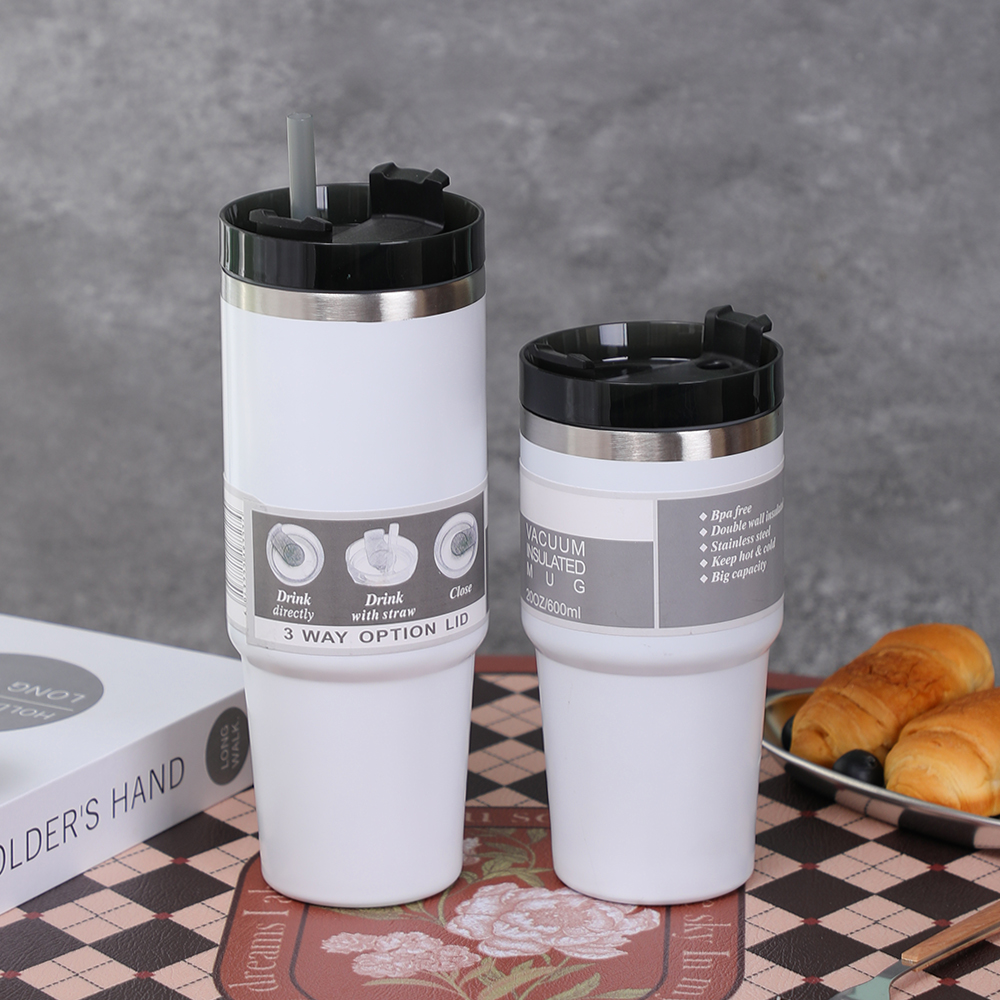
Insulation dynamics completely change the user experience. You have two main construction types to evaluate. Double-wall vacuum insulation represents the premium tier. Manufacturers remove air between two steel walls. This vacuum prevents heat transfer entirely. It stops external condensation perfectly. We call this a sweat-proof construction. No one wants a wet cup ruining their wooden desk. Vacuum insulation retains cold temperatures for 6 to 12 hours. It keeps hot drinks warm for 4 to 6 hours. You must require this feature for premium gifting.
Single-wall construction serves a different purpose entirely. It is highly lightweight. It remains highly budget-friendly. However, it conducts heat rapidly. If you pour hot coffee inside, the exterior burns your hand instantly. You should only select single-wall vessels for cold beverages.
Steel grading standards matter immensely. You must insist on 18/8 food-grade stainless steel. Engineers also refer to it as Type 304. The metal contains 18 percent chromium and 8 percent nickel. This specific ratio provides massive benefits. It creates an industry baseline for rust resistance. It ensures complete taste neutrality. Your water will never taste like metal. Lower grades do exist in the market. Many cheap vendors use Type 201 steel. It costs less to manufacture. However, it oxidizes quickly over time. It reacts poorly to acidic liquids like coffee. It leaves a harsh metallic aftertaste. Avoid it entirely.
Lid and accessory compatibility require equal attention. Evaluate the lid mechanics carefully. Slider closures work great for stationary office use. They open and close easily. Snap-closure lids provide heavy-duty security. They offer excellent spill-resistance guarantees. Consider your event mobility. Will attendees walk across massive convention halls? Secure lids become mandatory. Think about adding reusable metal straws. Silicone straws also provide a nice touch. They elevate the overall presentation significantly.
Logistics often derail well-planned projects. You must master Minimum Order Quantities early. We call them MOQs. Understand how vendor tier pricing works. Ordering larger batches reduces your unit cost. Dropping below vendor MOQs creates unexpected problems. Vendors often apply less-than-minimum fees. These penalties easily negate your savings. You might order fewer units but pay more overall. Always map these pricing tiers before ordering.
The proofing process demands extreme attention. Never bypass the digital proof. Review it closely on a large monitor. Check the logo placement. Verify the exact dimensions. For large-scale orders, go further. Request a physical pre-production sample. We call this a PPS. It lets you verify color adherence on actual metal surfaces. Digital screens often misrepresent physical ink colors. A PPS eliminates this risk entirely.
You must model hidden cost factors thoroughly. Setup charges surprise many buyers. Vendors often bill setup fees per color. They also bill per print location. Printing a logo on the front and back doubles this setup cost. Vectorization fees represent another hidden danger. This happens when you submit poor artwork files. Designers must recreate your logo manually. You avoid this by providing print-ready formats. Always use .AI or .EPS files.
Freight weight impacts your budget heavily. Stainless steel is inherently heavy. A pallet of drinkware weighs hundreds of pounds. Calculate dimensional weight shipping early. Compare it to actual weight pricing. Transporting heavy pallets to an event venue costs a premium. Finalize shipping estimates before you sign any purchase orders.
Supplier evaluation requires specific lenses. Consider the difference between in-house and brokered operations. Vendors printing in-house control the entire production floor. They typically offer tighter quality assurance. They provide much faster remediation for misprints. Brokered suppliers outsource the actual labor. This adds communication layers. It often delays urgent problem resolution.
Compliance verification protects your brand reputation. Never assume drinkware meets safety standards automatically. Request formal documentation from your supplier. Prove the lids are entirely BPA-free. Verify all components meet FDA compliance. If your event touches specific regions like California, demand Prop 65 compliance. This is especially critical for public giveaways. You must protect your organization from liability.
Use this procurement checklist to finalize your project:
Customizing event drinkware requires balancing unit cost against long-term durability. The choices you make regarding insulation, materials, and printing methods define the user experience. Poor choices lead to abandoned gifts. Smart choices create everyday essentials for your attendees.
Always prioritize 18/8 food-grade steel for health and safety. Choose laser engraving for the highest return on investment regarding long-term brand visibility. It never fades, chips, or washes away. Finalize your headcount early, prepare vector files, and request detailed quotes to ensure your next event goes flawlessly.
A: Expect a standard timeline of two to four weeks. Digital proofing usually takes two days. Once you approve the proof, standard production requires 10 to 15 business days. Transit time adds another week. Always factor in potential proofing delays if your artwork requires multiple revisions. Order early to avoid rush shipping fees.
A: Yes, you certainly can. Industry professionals call this variable data printing. It usually involves individual laser engraving for each unit. This process gives every attendee a highly personalized experience. However, it carries a premium cost. Expect higher setup fees and longer production times since machines must be reprogrammed for every vessel.
A: The raw vessel usually handles heat well, but the print method determines safety. Laser engraving remains entirely dishwasher safe. It simply exposes the bare metal. Ink-based methods like screen printing or UV digital printing are different. Dishwasher heat and harsh detergents will chip or degrade the ink. Always emphasize hand-washing.
