




Call Us Now
Phone:
+86-137-2797-2500 
Views: 0 Author: Site Editor Publish Time: 2026-07-02 Origin: Site
We have all experienced the dreaded midday mess. You open a backpack or briefcase only to find leaked dressings, soggy compartments, and ruined documents. This recurring daily failure turns meal prep into a highly frustrating chore. It damages personal belongings and wastes perfectly good food.
A genuine leakproof container must stop cross-compartment seepage completely. It must also prevent external spills. Most importantly, it should achieve this without requiring excessive force to open or lock shut. Too many brands promise watertight performance but fail under normal commuting conditions.
This guide provides an evidence-based framework for evaluating seal mechanisms and material safety. You will learn how to assess age-appropriate usability. By understanding these core principles, you can make a highly confident purchasing decision. Read on to master the mechanics behind the perfect daily lunch container.
Understanding how a container holds liquids requires examining its structural design. Many containers look similar on the outside. However, their internal engineering differs drastically. You must look closely at the sealing architecture before buying.
Manufacturers use the term "leakproof" loosely. You must distinguish between perimeter seals and compartment seals. A perimeter seal only keeps liquids inside the main outer shell. It prevents spills in your bag. However, it allows internal ingredients to mix freely.
Conversely, a true bento-style design seals each compartment individually. This isolation is crucial. It lets you pack wet foods like yogurt right next to dry crackers. Without individual compartment sealing, moisture migrates during transit. This turns crisp snacks into unappetizing mush.
Different brands employ different methods to achieve liquid isolation. We can categorize these mechanisms into three primary systems.
You must understand the industry definition of leakproof. Most multi-compartment boxes easily contain thick liquids. These include dips, yogurt, hummus, and applesauce. They perform flawlessly for these standard lunch items.
However, almost all of them will fail a water-inversion test. If you fill them with soup or water and shake them, liquid will escape.
Common Mistake: Never pack thin broth in a standard bento box. Always use a dedicated threaded thermos for watery soups. Reserve the compartment box for thicker textures.
The materials shaping your lunch container dictate its lifespan. They also determine daily maintenance requirements. Evaluating material science helps you avoid premature replacements.
Stainless steel remains the gold standard for purity. An 18/8 or 304 designation indicates a specific chromium-nickel ratio. This ratio effectively prevents rust.
Pros: Steel poses absolutely zero risk of chemical leaching. It is entirely non-porous. This means it rejects odor and stain retention completely. It also offers extreme drop durability.
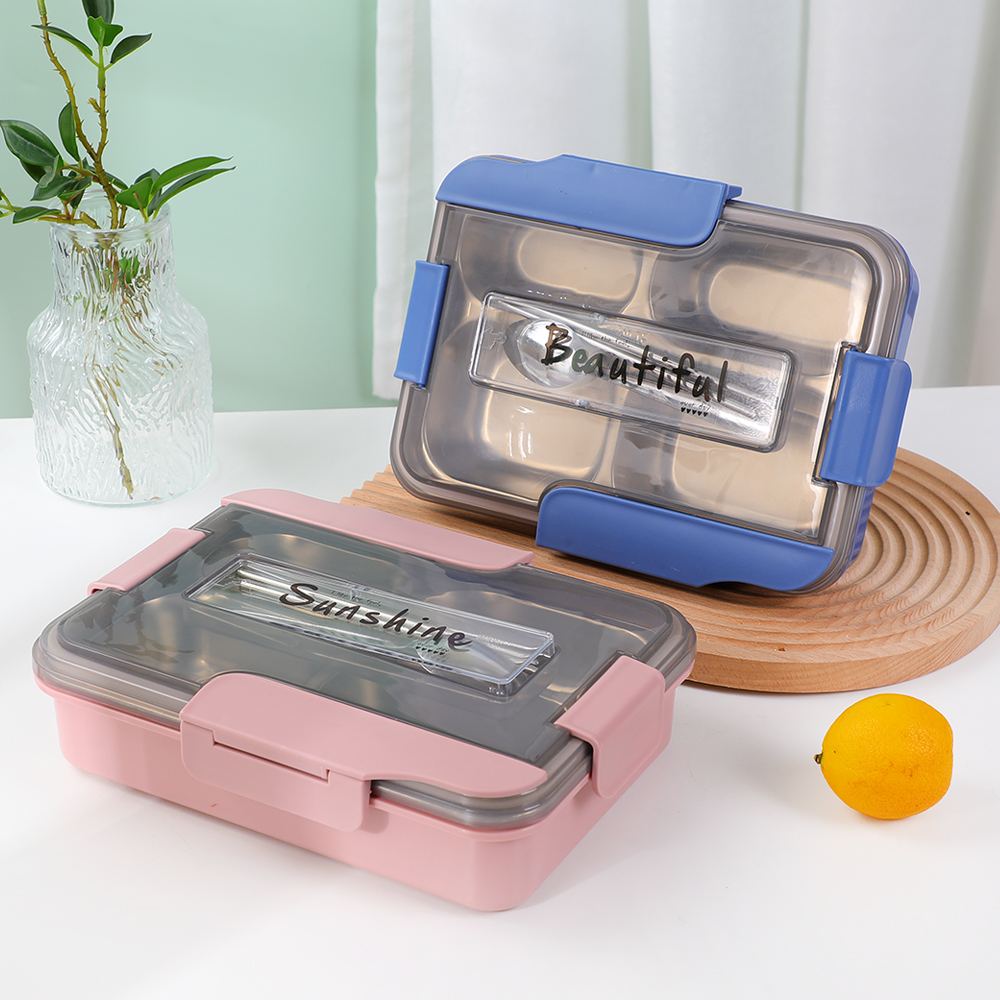
Cons: Steel commands a higher upfront cost. It feels notably heavier in a backpack. Furthermore, it is not microwaveable. A metal Leakproof Lunch Box typically requires a secondary silicone lid to achieve true leak resistance.
Modern plastics provide incredible versatility. Tritan, in particular, mimics the clarity of glass while resisting shattering.
Pros: Plastics offer transparent viewing windows. They remain exceptionally lightweight. Many specific formulations allow safe microwave heating. They also cost significantly less than metal alternatives.
Cons: Plastics suffer from micro-cracking over time. Constant use causes latch fatigue. More importantly, plastic absorbs strong odors and colors. Hot tomato sauce will permanently stain most plastic trays.
Silicone acts as the critical bridge in liquid management. It creates the actual barrier blocking fluid movement.
Pros: Silicone remains highly flexible. It naturally resists leaks when compressed tightly. High-quality silicone survives both dishwasher heat and microwave radiation safely.
Cons: It can retain strong soap tastes. Washing it with heavily scented detergents ruins the flavor of nearby food. Additionally, pure silicone feels structurally flimsy unless reinforced by a hard frame.
Never ignore material certifications. Food-contact materials must meet strict regulatory baselines. The FDA dictates minimum safety standards in the United States.
For ultimate peace of mind, seek LFGB certification. This European standard imposes far stricter testing protocols regarding chemical migration. LFGB-certified silicone will not turn white when pinched. This proves it contains no cheap chemical fillers.
| Material Type | Durability Level | Microwave Safe | Odor Resistance |
|---|---|---|---|
| 18/8 Stainless Steel | Extreme | No | Excellent |
| Tritan Plastic | Moderate | Yes (Check specs) | Poor |
| LFGB Silicone | High | Yes | Good (Avoid strong soaps) |
Children interact with food containers much differently than adults do. You cannot simply buy a smaller version of an adult box. You must evaluate specific mechanical traits tailored to small hands.
Latch tension often makes or breaks a child's lunch experience. A four-year-old must open the container independently. They must also lock it securely when finished.
Test the latch resistance yourself. If you struggle to pop it open, a toddler will fail entirely. A child who cannot re-lock their container will spill leftovers inside their bag. The ideal mechanism uses an extended lever. This gives tiny fingers a mechanical advantage.
School environments destroy fragile gear. Drops onto concrete floors happen daily. You must inspect the hinge construction carefully.
Avoid thin plastic living hinges. They snap after a few months of daily flexing. Instead, look for hinges reinforced by metal pins. Furthermore, prioritize exteriors featuring rubberized bumpers. These bumpers absorb kinetic energy during a fall. They prevent the rigid plastic shell from shattering.
Map the compartment volume directly to the child's age group. Toddlers thrive on variety. They need four to six small compartments. Elementary students require larger main sections for full sandwiches.
Emphasize shallow compartments. Shallow trays make food highly visible and visually appealing. This encourages picky eaters to consume more. It significantly reduces unnecessary food waste.
Daily maintenance dictates the true cost of ownership. Removable internal trays are mandatory. They allow you to wash the food-contact surface thoroughly.
Best Practice: Pay extreme attention to the lid seal. Warn against buying boxes with non-removable rubber gaskets. Trapped moisture behind these fixed gaskets inevitably leads to toxic black mold. Always choose designs allowing total disassembly.
Professional environments demand different functionalities. Adults prioritize meal prep efficiency and aesthetic discretion over drop survival.
A reliable Leakproof Lunch Box for adults should support weekend meal prep. Evaluate how well multiple units stack inside a standard refrigerator.
Look for extensive modularity. Premium adult systems include specialized modular inserts. These might feature tiny, dedicated dressing cups with threaded lids. This scalability lets you configure the layout based on daily menu changes.
Commuters frequently transition meals straight from a cold fridge to a hot microwave. This thermal shock destroys cheap plastics.
Highlight materials explicitly engineered to resist thermal warping. Borosilicate glass and specialized PP plastics perform best here.
Note this critical rule: True leakproof seals must be vented or removed entirely before microwaving. Heating a sealed box expands trapped air rapidly. This causes dangerous pressure blowouts and ruined meals.
Adults carry briefcases, messenger bags, or slim laptop totes. Bulky cubes do not fit these bags.
Assess the profile thickness carefully. A slim, flat design slides easily next to a laptop. Deep, bowl-like designs work better for bulk salads but require a separate carrying bag. Choose the form factor matching your daily transit style.
We do not rely on manufacturer claims. We execute harsh physical tests to verify fluid containment and structural integrity.
Selecting the right container dramatically improves your daily routine. It eliminates messy spills and keeps food appetizing until midday.
When shopping, follow these final action steps:
Finally, treat these items as investment pieces. Hand-wash the lids and seals diligently. This simple habit guarantees long-term performance, regardless of any "dishwasher safe" claims printed on the packaging.
A: Most compartment boxes are leak-resistant, not completely watertight. They effectively contain thick liquids like yogurt, dips, or applesauce. However, thin liquids like soup or water will breach the internal dividers during transit. Use a dedicated thermos with a threaded lid for broths.
A: The bottom trays are usually dishwasher safe. However, high heat severely warps the silicone seals on the lids. This thermal damage compromises the leakproof guarantee. Always hand-wash the lid to extend the lifespan of the gaskets.
A: Remove the seal and soak it in equal parts white vinegar and warm water for 30 minutes. Scrub crevices with a baking soda paste using a toothbrush. Rinse thoroughly and air dry completely. If black spots remain, you must replace the seal entirely.
A: Lifespan depends heavily on the material. Plastic models generally survive one to two school years before hinges weaken or seals warp. A premium stainless steel box can easily last over five years, provided you replace the silicone gaskets when they wear out.
