


Call Us Now
Phone:
+86-137-2797-2500

Views: 0 Author: Site Editor Publish Time: 2025-12-17 Origin: Site


Choosing a Water Bottle initially seems like a trivial task until you find yourself standing before a retail shelf or scrolling through endless online listings. The decision is no longer just about selecting a container to hold liquid; it has evolved into a complex choice between utility, defined by weight and volume, and comfort, defined by advanced temperature control. You must determine if the luxury of sipping ice-cold water hours after leaving the house outweighs the efficiency of carrying a significantly lighter load.
The core conflict lies in this primary trade-off. Do you prioritize the refreshing experience of a cold drink during a sweltering commute, or do you value the "packability" and lightness required for a long-distance trek? This article moves beyond basic definitions to evaluate the engineering physics, volume-to-weight ratios, condensation risks, and long-term durability of these vessels. We will help you decide which vessel deserves a permanent spot in your daily carry.
Temperature vs. Weight: Insulated water bottles maintain temperature for 12–24 hours but are roughly 30–40% heavier than single-wall counterparts.
Volume Efficiency: Non-insulated bottles hold 15–20% more fluid for the same external dimensions, making them superior for space-restricted packing.
The Condensation Factor: Insulated bottles are "sweat-proof," protecting electronics in your bag; non-insulated bottles require separation from moisture-sensitive gear.
Durability Nuance: Single-wall steel can dent without losing function; double-wall vacuum seals can break upon severe impact, turning a premium bottle into a heavy standard one.
To understand why one bottle keeps ice frozen for a day while another warms up in an hour, we must look at the architecture of the steel itself. The difference lies not just in the material, but in how that material is manipulated to interact with the laws of thermodynamics.
Single-wall bottles feature what is often called "Single Mould Construction." This design consists of one layer of material—typically stainless steel or plastic—separating the liquid from the outside world. Because metals like steel are highly conductive, thermal energy moves rapidly through this single barrier. If you pour ice water into a single-wall steel bottle, the cold transfers to the metal almost instantly, cooling your hand and warming the liquid.
However, this rapid heat transfer offers a specific "survival" utility that insulated versions lack. In emergency situations, a single-wall stainless steel bottle (provided it is unpainted) can be placed directly into a fire to boil water. This capability makes it a favorite among bushcraft enthusiasts and survivalists who view their gear as multi-purpose tools.
Insulated bottles employ a double-wall structure where air is sucked out of the gap between the inner and outer vessels to create a vacuum. Since heat requires matter (like air or water) to travel through conduction or convection, the vacuum gap acts as a formidable barrier, effectively trapping the temperature inside.
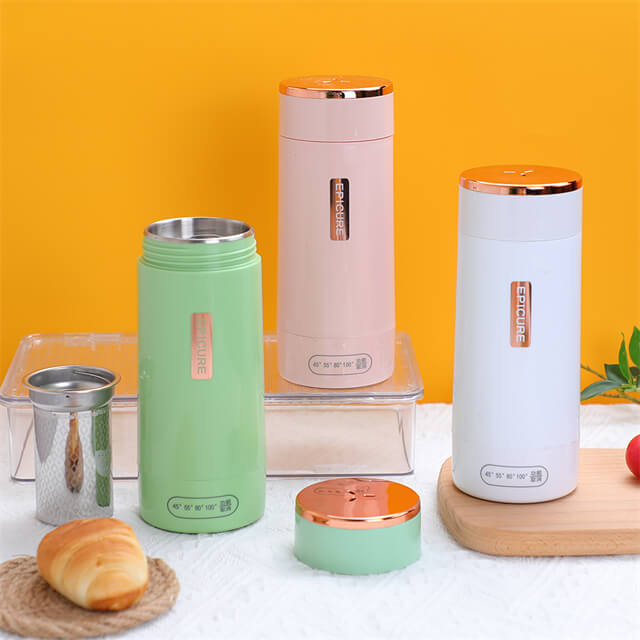
To achieve the status of a 24 hours water bottle, a premium Water Bottle manufacturer will often add an extra step: coating the inner wall with copper. This reflective layer combats heat transfer via radiation—the third method of heat movement—bouncing thermal energy back into the liquid. While standard vacuum insulation is passive, there is also the emerging category of the Electric Water Bottle. These devices distinguish themselves by using battery-powered active heating or UV purification technology, offering extreme precision for users who need their water at an exact degree, though at the cost of complexity and charging requirements.
When you carry a bottle every day, physics eventually catches up with you. The "efficiency" of a water bottle is best measured by how much hydration it provides relative to the space and weight it consumes in your pack.
Insulated bottles suffer from a distinct weight penalty. Because they require two sheets of steel rather than one, plus a heavier base cap to seal the vacuum, they are significantly heavier. Once you drink the water, an insulated bottle becomes "dead weight." Detailed analysis shows that insulated options are often nearly double the weight of plastic or single-wall steel alternatives. For a commuter carrying a laptop and gym gear, this extra pound might be negligible. For a thru-hiker counting grams, it is a dealbreaker.
The vacuum gap that keeps your water cold also eats into the bottle's internal capacity. This creates a volume paradox where the external dimensions do not match the internal volume.
Consider the real-world math: A generic 750ml single-wall bottle often has the same physical footprint (height and width) as a 500ml insulated bottle. You are effectively carrying a larger object for less water. If your backpack space is at a premium—such as during "OneBag" international travel where every cubic inch counts—non-insulated vessels offer a superior hydration-to-bulk ratio.
| Feature | Insulated Bottle (Double Wall) | Non-Insulated Bottle (Single Wall) |
|---|---|---|
| Weight (Empty) | Heavy (approx. 300g - 500g) | Lightweight (approx. 150g - 200g) |
| Volume Efficiency | Lower (Vacuum gap takes space) | High (Thin walls max capacity) |
| Temp Retention | 12h Hot / 24h Cold | Equalizes in 1-2 hours |
| Condensation | None (Sweat-proof) | High (Sweats with cold liquids) |
One of the most overlooked aspects of water bottle selection is condensation, often referred to as "sweating." This phenomenon can dictate where you can store your bottle and what you can carry alongside it.
Single-wall bottles sweat because the surface temperature of the metal drops rapidly when filled with cold liquid. Ambient moisture in the air contacts the cold steel and condenses into liquid water droplets. On a humid day, a single-wall bottle containing ice water can generate enough runoff to create a puddle on your desk or soak the fabric of a bag.
For the urban commuter, the Insulated Water Bottle holds a massive tactical advantage: a completely dry exterior. You can safely store an insulated bottle inside a messenger bag right next to a laptop, camera lenses, or important paper documents without fear of moisture damage. Conversely, mitigating this risk with a non-insulated bottle requires using a neoprene sleeve or dedicating a separate, waterproof compartment for hydration, which adds friction to the user experience.
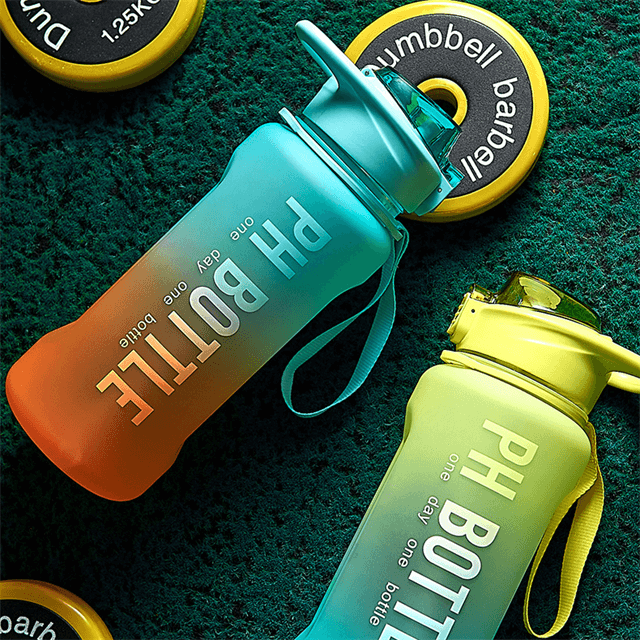
Comfort extends to how the bottle feels in your hand. Holding a freezing cold single-wall bottle in winter, or a boiling hot one, is physically uncomfortable. Insulated bottles remain at room temperature to the touch regardless of the internal contents. To improve this experience, manufacturers often introduce finishes like the Colorful Suede Water Bottle, which utilizes powder coating or textured paint. While these finishes aid grip and aesthetics, they do not solve the heat transfer issue on single-wall units; they merely make the bottle less slippery.
Longevity is not just about whether the bottle breaks; it is about whether it continues to perform its primary function over time.
In terms of pure structural integrity, single-wall bottles are surprisingly robust. They are prone to denting if dropped on a rock, but a dent rarely affects the bottle's core function of holding water. In the hiking community, a battered single-wall bottle with dents is often seen as having "patina" or character.
Insulated bottles are more fragile in this specific regard. If an insulated bottle is dented deeply enough, the outer wall may touch the inner wall. This contact creates a thermal bridge, instantly breaking the vacuum seal. The bottle will still hold water, but it will lose its insulating properties immediately, effectively turning a premium product into a heavy standard bottle.
Hygiene is a critical factor for daily use. While stainless steel is the standard material for high-quality bottles, considerations around a BPA Free Sports Water Bottle remain vital. Non-insulated plastic options carry higher chemical leaching risks if not sourced from reputable manufacturers. Furthermore, insulated bottles help prevent exterior moisture, which reduces the "gym bag smell" caused by damp fabric surrounding the bottle.
Cleaning complexity also varies. Single-wall bottles often feature simpler geometries with fewer crevices. Insulated bottles, particularly those with high-performance thermal ratings, may have complex cap assemblies to prevent thermal leaks. These caps require deep cleaning to prevent mold buildup in the gaskets.
There is no universal "best" bottle. The right choice depends entirely on your environment and activity level. We have broken down four common scenarios to help you identify where you fit.
Your priorities are protecting expensive electronics from condensation and enjoying coffee or cold water over an 8-hour shift. In this scenario, the weight of the bottle is negligible as it sits primarily on a desk or in a car cup holder. The "No Sweat" guarantee is critical for bag safety.
You are focused on cutting base weight and maximizing water capacity per cubic inch of pack space. Every ounce matters on the trail. Here, thermal luxury is sacrificed for performance efficiency. You drink water at ambient temperature to stay hydrated without the burden of heavy steel.
Runners and cyclists prioritize fast flow, "squeezability," and low weight. Heavy steel insulated bottles are cumbersome and dangerous to use during active motion. A lightweight, single-wall plastic or metal bottle allows for quick hydration without breaking stride.
You need multi-functionality. Your bottle must withstand rock impacts and potentially serve as a cooking pot. A single-wall stainless steel bottle is the only vessel that can be placed in a fire to purify water, making it an essential survival tool.
When analyzing the Return on Investment (ROI) for hydration gear, we must look at both the upfront sticker price and the expected years of service.
Insulated bottles typically command a 2x–3x price premium over their single-wall counterparts. This cost is justified by the complex manufacturing process, which involves vacuum sealing, Water Bottle manufacturer precision welding, and often copper dipping to enhance thermal performance.
A single-wall stainless steel bottle is practically indestructible and offers a true "Buy It For Life" (BIFL) value proposition. Unless it is crushed or punctured, it will hold water forever. Insulated bottles, while durable, are technically "consumables" over a long timeline of 5 to 10 years. Eventually, the vacuum seal may fail due to microscopic cracks or repeated drops, though the bottle remains usable as a non-insulated container.
Ultimately, the battle between insulated and non-insulated bottles is not about which technology is superior, but which tool is right for the environment. There are clear trade-offs between the comfort of cold water and the utility of a lightweight carry.
If your day involves long sedentary periods at a desk, in a car, or on the beach, choose Insulated. The temperature retention boosts morale, and the lack of condensation protects your gear. However, if you are moving fast, carrying your gear on your back, or need to maximize water volume in a tight space, choose Non-Insulated. The healthiest bottle is the one you actually carry—don't let the weight of a premium bottle stop you from taking it with you.
A: Yes, high-quality stainless steel can handle boiling water. However, the bottle will become too hot to hold with bare hands immediately, and the water will cool down much faster than in an insulated bottle.
A: The smell usually comes from the lid gaskets or moisture trapped in the cap threads, not the steel itself. Because insulated bottles are often used for coffee or flavored drinks, residue builds up. Regular scrubbing of the gasket is required.
A: Generally, yes. A single-wall bottle is significantly lighter and holds more water for its size. Many hikers prioritize hydration volume and weight savings over having ice-cold water.
A: Test it by filling it with boiling water. If you feel the heat coming through to the outside of the bottle within a few minutes, the vacuum seal is compromised, and it is functioning effectively as a non-insulated bottle.
A: Electric bottles offer active UV purification or precise temperature maintenance, which is useful for travelers in areas with questionable water quality or tech enthusiasts. For general daily hydration, a standard vacuum-insulated bottle provides better ROI and durability.
