


Call Us Now
Phone:
+86-137-2797-2500 
Views: 0 Author: Site Editor Publish Time: 2025-12-19 Origin: Site
The romantic image of camping often involves a cast-iron skillet sizzling over a perfect bed of coals as the sun sets. In reality, wind often blows out your flame, uneven ground spills your soup, and limited water makes cleaning a nightmare. This gap between expectation and reality is where your gear choice defines the experience. Camping Cooking Gear is not just a random assortment of kitchen utensils thrown into a trunk; it is a specialized life-support system designed to provide caloric reliability and efficiency in unpredictable environments.
A functional kit must address four distinct zones: generating heat, preparing food, consuming meals, and maintaining sanitation. Without a cohesive system, you risk carrying dead weight or finding yourself unable to cook a simple meal when the weather turns. By understanding these systems, you transform outdoor cooking from a stressful chore into a seamless part of your adventure. You will learn how to build a kit that balances weight, durability, and performance for any trip.
Material Matters: Titanium burns eggs; aluminum spreads heat. Choose materials based on cooking style, not just weight.
System Over Individual Tools: A stove is useless without wind protection; a pot is useless without a gripper. Buy systems, not isolated items.
Fuel Logic: Propane is convenient for cars; isobutane is compact for backpacks; liquid gas is essential for extreme cold.
Sanitation is Gear: Your "kitchen" must include a Leave No Trace (LNT) wash system to prevent illness and animal attraction.
Many beginners make the mistake of buying a stove first and forgetting the rest of the ecosystem. A truly effective outdoor kitchen functions like a machine where four specific systems interact. If one component fails, the entire process of feeding yourself becomes difficult.
Moving beyond the open fire is the first step toward reliability. While a campfire offers ambiance, it is notoriously difficult to control for precision cooking. Relying solely on wood requires dry fuel, which is never guaranteed. Your primary heat source needs to offer consistency. This usually means a gas stove for boiling and simmering, while Camping Fire Pits serve as a secondary source for warmth and grilling when conditions allow. Understanding the trade-offs between the precision control of a canister stove and the raw thermal mass of a fire pit helps you prepare for variable weather.
The vessel hierarchy dictates what you can cook. Household pans often fail in the wild because their handles are too bulky to pack, and their construction may warp under the intense, focused heat of a camp stove. Specialized gear solves this with detachable grippers and nesting designs. This system also includes your prep surface. Without a stable cutting board, you are forced to chop vegetables on a dirty rock or a precarious cooler lid. Investing in purpose-built vessels ensures safety and efficiency.
Food safety in the outdoors revolves around temperature control. The role of the Ice Cooler is critical here. Whether you choose a heavy-duty roto-molded option for week-long ice retention or a soft cooler for day trips, this vessel protects your perishables from spoilage. Equally important is your ability to boil water safely. An Outdoor Kettle is often the most used item in camp, essential for rehydrating meals, brewing coffee, and sterilizing water if your filter fails. It acts as the bridge between raw water sources and safe consumption.
This is the unsexy but vital gear that keeps you healthy. Biodegradable soap, wash basins, and scrubbers form your defense against foodborne illness. In the backcountry, you cannot simply turn on a tap to rinse a plate. Your hygiene system must also include bear-proof containers and fire safety tools like gloves. Neglecting this system attracts wildlife and spreads bacteria.
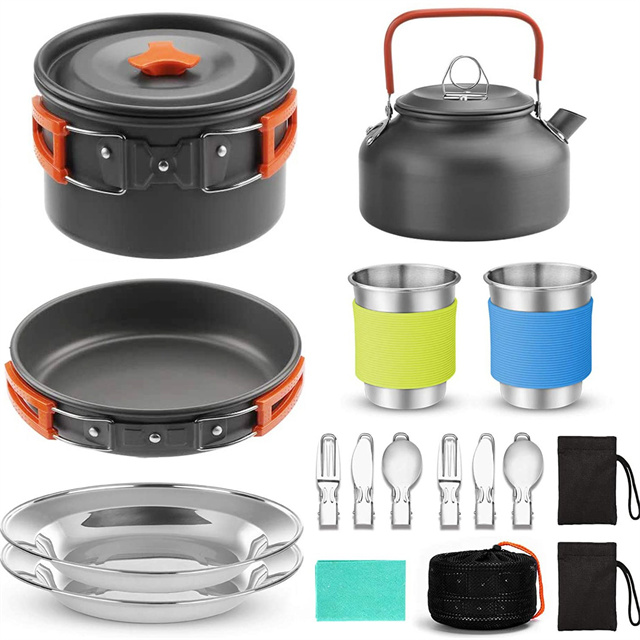
Choosing the right material is a balancing act between how much weight you want to carry and how well you want to eat. Physics dictates that lightweight metals often conduct heat poorly, leading to scorched food.
| Material | Primary Benefit | Major Drawback | Best Use Case |
|---|---|---|---|
| Titanium | Ultralight weight | Poor heat conductivity (Hot spots) | Boiling water for dehydrated meals |
| Hard-Anodized Aluminum | Good heat distribution & durability | Can dent if crushed | General cooking and backpacking |
| Stainless Steel | Extreme durability & rust resistance | Heavy & prone to scorching | Open fire usage & rough handling |
| Cast Iron | Heat retention & non-stick | Very heavy & high maintenance | Car camping & gourmet meals |
Titanium is the darling of the long-distance hiker. It is incredibly strong and featherlight, making it unbeatable for ultralight camping cooking gear. However, it is a terrible conductor of heat. The flame creates a single intense hot spot that will burn eggs or pancakes instantly while the edges remain cold. It is best strictly for boiling water to rehydrate meals, not for cooking real food.
For most campers, hard-anodized aluminum is the gold standard. It offers excellent heat distribution, preventing food from sticking to the bottom. The anodization process creates a durable oxide layer that resists corrosion and scratches. While it is lightweight, it can dent if mishandled in a pack. It represents the best compromise between performance and portability.
Stainless steel offers bombproof durability. You can scrub it with sand, bang it against rocks, and place it directly into red-hot coals without fear. It is rust-resistant and safe for open fires. The downside is weight; it is significantly heavier than aluminum. If the steel is too thin, it is also prone to scorching food, though thicker bottoms mitigate this.
Nothing retains heat like cast iron. Once hot, it stays hot, making it perfect for searing steaks or baking over a fire pit. A well-seasoned pan is naturally non-stick. However, it is extremely heavy and requires maintenance to prevent rust. It is strictly for trips where your car carries the gear.
Your choice of stove dictates your menu. A tiny pocket stove is great for boiling water but terrible for a group stew. You must evaluate three variables: group size, fuel availability, and weather conditions.
Group size is the first filter. Pocket stoves serve one or two people efficiently. For groups of four or more, you need the stability and surface area of a double-burner tabletop stove. Fuel availability is the second factor. Propane is ubiquitous at gas stations, while white gas is niche but essential for international travel or extreme cold. Finally, weather conditions dictate performance. Liquid fuel stoves perform best in sub-freezing temps where canister pressure drops.
Canister stoves are the most popular for convenience. Integrated systems like Jetboil lock the pot to the burner for maximum efficiency, while screw-on attachments are lighter but less wind-resistant. Liquid fuel stoves are high maintenance, requiring priming and pumping, but they offer extreme reliability in harsh environments. Bio-mass or wood stoves are a sustainable option but are labor-intensive and reliant on finding dry wood.
Cooking over a fire requires a distinction between heating and cooking. A roaring fire is for warmth; a bed of coals is for cooking. To do this safely, you need essential add-ons like heavy-duty grill grates and fire-safe tongs. Never use plastic or silicone utensils near open flames. Safety gear, including aramid fiber gloves and immediate water access, is non-negotiable when managing an open pit.
Space in a backpack or trunk is finite. Manufacturers invest heavily in engineering gear that disappears when not in use. This concept of "nesting" allows pots to hold fuel canisters, stoves, and mugs inside them, eliminating dead air in your pack.
Silicone technology has revolutionized packing. Collapsible camping cooking gear, such as bowls and kettles that fold flat, saves immense volume. However, these items are often harder to clean and less durable than rigid gear. The critical "break point" is where the silicone meets the metal base. Delamination can occur if the flame wraps around the base, so these tools require careful heat management.
True compact camping cooking gear is designed to stack perfectly. A well-designed kit might include two pots, a frying pan lid, and cups that all fit within the footprint of the largest pot. This organization prevents rattling and protects delicate components during transport. When selecting gear, check if your specific fuel canister size fits inside your chosen pot.
The "Spork" is the classic symbol of efficiency, but the debate between dedicated cutlery and multi-tools continues. For serious cooking, a folding prep knife, like an Opinel, beats a tactical survival knife every time. A survival knife is too thick to slice onions effectively, whereas a thin prep blade makes cooking a joy.
The meal does not end when you eat. The cleanup process is where many campers fail, leading to sick group members or damaged ecosystems. A professional approach includes a dedicated hygiene strategy.
To clean effectively without running water, use the 3-bin method. Bin one contains hot water and soap for washing. Bin two holds clear hot water for rinsing. Bin three contains cold water with a sanitizer tablet. You will need collapsible sinks and drying nets to manage this cycle efficiently. This ensures your dishes are not just visually clean but sanitized against bacteria.
Modern campers are moving away from single-use waste. Sustainable camping cooking gear focuses on longevity and reusability. The green keys to sustainability include avoiding single-use propane bottles. Instead, use refillable bulk tanks or fuel transfer tools like FlipFuel to consolidate half-empty canisters. Avoiding single-use plastics in favor of durable enamel or stainless steel tableware significantly reduces your environmental footprint.
Food odors attract wildlife. This endangers both you and the animals. In bear country, bear canisters are mandatory. Even where bears are absent, rodents can chew through tents to reach food. Odor-proof bags (like LOKSAK) play a vital role in protecting your gear from destruction and preventing wildlife from becoming habituated to human food sources.
You do not need to buy everything at once. Building a kit is a progression based on your experience level and budget. A Total Cost of Ownership (TCO) analysis helps you decide where to spend money.
Tier 1: Scavenger. Use household stainless steel pots and thrift store finds. This costs $0 effectively but is heavy. It is perfect for your first car camping trip.
Tier 2: Enthusiast. Invest in aluminum nesting sets and reliable pocket stoves. This represents moderate cost but high value, suitable for most backpackers.
Tier 3: Pro/Expedition. Upgrade to titanium cookware, premium roto-molded coolers, and regulated stoves. This gear offers specialized performance for extreme conditions at a high cost.
It is tempting to buy cheap knock-offs, but sticking to a reputable Camping Cooking Gear manufacturer matters. Brand-name gear comes with access to spare parts like O-rings, jets, and pump cups. When a stove fails in the backcountry, having a warranty support team or a repair kit can save the trip.
Before you head out, audit your kit against this list to ensure you have covered the basics:
Primary Heat Source + Backup (matches/lighter).
Pot/Pan appropriate for the heat source.
Prep tool (Knife/Cutting Board).
Eating tool (Spork/Chopsticks).
Cleanup kit (Soap/Sponge/Scraper).
The best gear is the gear you know how to use. A fancy stove is useless if you do not know how to prime it in the wind. Start with a simple, durable aluminum set and a standard canister stove. This combination is forgiving and versatile. Upgrade to specialized titanium or cast iron only when your specific trip demands force the change. Take time to audit your current kitchen gear before your next trip. Identify the "weak link"—whether it is a heavy pot or a finicky stove—and replace it to elevate your outdoor experience.
A: You can, but it is not ideal. Household pans are heavy and have long, non-removable handles that make packing difficult. Furthermore, the handles are often made of plastic or phenolic materials that can melt over the wider, less controlled flames of camp stoves or fire pits. Regular pans may also warp if subjected to the intense spot-heat of a lightweight backpacking stove. It is better to use robust stainless steel from home or invest in specific camping cookware.
A: Propane is stored at higher pressure, allowing it to perform well in very cold temperatures, but it requires heavy steel tanks. Isobutane is a mix of gases stored at lower pressure, allowing for lightweight, thin-walled canisters perfect for backpacking. However, isobutane struggles in freezing conditions as the pressure drops, leading to weak flames. Propane is generally for car camping; isobutane is for backpacking.
A: It depends on your cooking style. If you primarily boil water for freeze-dried meals and coffee, titanium is worth the investment for its incredible weight savings. However, if you plan to cook real food like eggs, fish, or pancakes, titanium is a poor choice due to its low heat conductivity, which causes hot spots and scorching. For "gourmet" cooking, aluminum or stainless steel is far superior.
A: Use the "scrape-wash-rinse" method. First, scrape all food particles into a trash bag to keep dishwater clean. Use a small amount of biodegradable soap in a wash basin with warm water to scrub dishes. Dip them in a second basin of clean water to rinse. Ideally, follow with a brief sanitize soak. Scatter the strained greywater 200 feet away from camp and water sources to follow Leave No Trace principles.
A: The most sustainable option is often a wood-burning stove (bio-mass), as it uses fallen twigs and requires no metal canisters. However, for gas stoves, refillable bulk propane tanks (like 5lb or 10lb cylinders) are far more sustainable than single-use 1lb green bottles. For backpacking, using a fuel transfer tool to consolidate half-empty canisters helps ensure you use every drop of fuel before recycling the metal container.
