


Call Us Now
Phone:
+86-137-2797-2500 
Views: 0 Author: Site Editor Publish Time: 2026-01-22 Origin: Site
Almost every reusable bottle on the market today boasts impressive numbers on its label. Manufacturers promise that their vessels can keep ice frozen for 24 hours or keep coffee piping hot for 12 hours. However, many users find that by lunchtime, their "piping hot" coffee is merely tepid, or their ice water has turned into room-temperature soup. This discrepancy often leads to skepticism regarding the "up to" caveats found in fine print. Understanding the gap between marketing promises and thermodynamic reality is essential for setting the right expectations.
The industry standard for a high-performing container is double-wall vacuum insulation. This technology separates a quality Insulated Water Bottle from a standard single-wall cup. By removing the air between two layers of stainless steel, heat transfer is drastically reduced. Yet, not all vacuum bottles are created equal. This guide moves beyond the label claims. We will analyze the physics of temperature retention, identify the variables that destroy heat, and explain how to evaluate manufacturing quality before you make a purchase.
The Golden Ratio: Standard performance for high-quality vacuum bottles is 12 hours hot and 24 hours cold; claims significantly beyond this usually involve specific, unrealistic lab conditions.
Cold Wins: Physics favors cold retention due to the "latent heat of fusion" (ice melting absorbs energy) and less aggressive temperature differentials compared to hot liquids.
The Weakest Link: The lid and the neck (where the two walls meet) are where 90% of temperature loss occurs.
Material Matters: Look for copper-lined vacuum layers and 18/8 stainless steel to ensure the bottle performs as advertised.
When you see a bold claim on a label, remember that it was likely derived in a strictly controlled laboratory. Understanding how these tests are conducted helps explain why real-world performance often varies.
Manufacturers typically test their products in a sealed, climate-controlled room set to 68°F (20°C). They fill the bottle completely to the brim, seal it, and do not open it for the duration of the test. This maximizes thermal mass and eliminates air exchange.
Your reality is likely very different. You might leave your bottle in a hot car where ambient temperatures soar above 100°F. You open the lid frequently to take sips, which introduces fresh air and allows heat to escape. Furthermore, as you drink, the volume of liquid decreases. A half-empty bottle loses its thermal energy much faster than a full one. These variables inevitably reduce the retention time compared to the idealized lab results.
Not all vessels are engineered to hold temperature. To help you manage expectations, we have categorized performance based on construction type. This hierarchy shows what you can realistically expect from different hydration tools.
| Bottle Type | Construction | Real-World Hot Retention | Real-World Cold Retention |
|---|---|---|---|
| Standard Single Wall | One layer of plastic or steel | < 1 Hour | < 1 Hour |
| Basic Double Wall | Two layers with air trapped between | 2–4 Hours | 3–5 Hours |
| Vacuum Insulated (Standard) | Two layers, air removed | 8–10 Hours | 12–18 Hours |
| Premium Vacuum | Vacuum + Copper Liner + Thick Steel | 12+ Hours | 24+ Hours |
You may notice that brands almost always promise longer retention for cold drinks than hot ones. This is not a marketing trick; it is a result of basic physics.
Phase Change Physics: Ice acts as a powerful thermal buffer. Before the temperature of your water can rise significantly, the ice must melt. This process, known as the latent heat of fusion, absorbs a massive amount of energy without raising the liquid's temperature. Hot coffee has no such buffer. It begins cooling the moment it is poured, as there is no phase change to delay the temperature drop.
The Delta T Factor: Heat transfer speed depends on the difference in temperature (Delta T) between the liquid and the outside air. Hot coffee is often around 200°F, while room temperature is 70°F—a difference of 130 degrees. This large gap forces rapid heat loss. In contrast, ice water is 32°F, creating a gap of only about 38 degrees against room temperature. The thermal exchange is naturally slower because the "pressure" to equalize temperatures is lower.
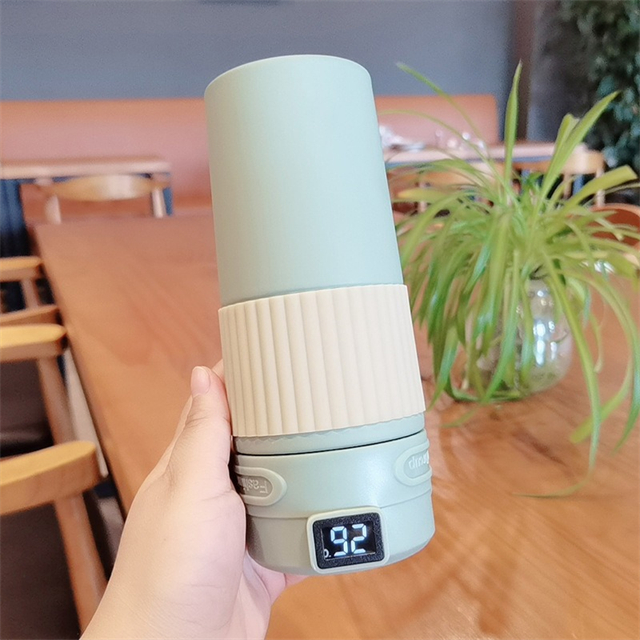
To understand why a Water Bottle costs $40 instead of $10, we must look at the microscopic engineering inside the walls.
Heat travels through matter. In a standard cup, heat moves through the plastic or glass walls (conduction) or through the air trapped between walls (convection). Vacuum insulation works by creating a void. By sucking the air out of the space between the inner and outer stainless steel walls, manufacturers remove the medium that heat needs to travel. Without air molecules to pass energy along, heat is effectively trapped.
Consumer Check: You can test this yourself. Shake the bottle near your ear. If it creates a ringing sound or feels surprisingly light for its size, the steel might be too thin. If the outside of the bottle feels hot immediately after pouring boiling water in, the vacuum seal is compromised.
While a vacuum stops conduction and convection, it cannot stop radiation. Radiant heat travels like light waves. To combat this, a premium Water Bottle manufacturer will often coat the exterior of the inner wall with a layer of copper. This is an invisible upgrade you cannot see from the outside.
The copper layer acts like a mirror for infrared energy. It reflects heat back into the liquid (keeping your coffee hot) or deflects external radiant heat away from the inner chamber (keeping your water cold). This feature is often the deciding factor that separates a mid-range $15 bottle from a high-performance $35+ vessel.
Every vacuum bottle has a bottleneck. The mouth of the bottle is the only point where the inner and outer walls must physically touch to create a sealed vessel. This connection creates a "thermal bridge." Heat bypasses the vacuum by traveling up the inner wall, crossing the lip, and traveling down the outer wall.
Design Impact: This is why narrow-mouth bottles generally retain temperature longer than wide-mouth versions. A narrower opening means less surface area for this thermal bridge, reducing the highway available for heat to escape.
Even the best engineering can fail if usage habits work against the physics of insulation. Several variables can drastically shorten the life of your hot or cold beverage.
Air inside the bottle is a poor insulator compared to the vacuum walls. When you leave a bottle half-empty, the remaining space fills with air. This air absorbs heat from your drink, accelerating the cooling process. A bottle that is only 25% full will lose temperature roughly twice as fast as one that is 90% full.
Actionable Advice: Purchase the size you will actually use. If you only drink 12 ounces of coffee, carrying it in a 32-ounce container ensures that the extra air space will cool your drink rapidly. Match the vessel size to your consumption habits.
The lid is often the primary escape route for thermal energy. While a bottle might be marketed as a leak proof water bottle, being water-tight does not mean it is heat-tight. Standard plastic caps are relatively poor insulators compared to the double-walled vacuum body.
Evaluation: When shopping, inspect the underside of the cap. Look for "honeycomb" structures, which trap air to create insulation, or thick lids with dual silicone gaskets. A simple, thin plastic flip-lid will bleed heat rapidly, regardless of how good the bottle body is.
Steel has a high thermal mass. If you pour hot coffee into a cold steel bottle, the metal immediately steals heat from the liquid to warm itself up. This can drop your beverage temperature by 10–20 degrees within minutes.
The professional trick is "pre-charging." Pour boiling water into your bottle and let it sit for five minutes before emptying it and filling it with your drink. For cold drinks, use ice water. This tempers the steel, ensuring the container adds to the thermal inertia rather than subtracting from it.
Since no single bottle is perfect for every scenario, your choice should depend on your primary activity.
For the daily commute, convenience often overrides maximum retention. You likely want a portable water bottle that fits in a cupholder and allows for one-handed operation.
Priority: Sip-through lids. While these lids sacrifice some heat retention compared to a screw-top, they offer necessary accessibility.
Spec: Look for "locking" mechanisms. These prevent accidental spills in your bag. Accept that a flip-lid will likely reduce your "hot" window to about 6–8 hours, which is usually sufficient for a workday.
When you are on the field or at the gym, you need volume and flow rate. A dedicated sports water bottle typically features a chug cap or a straw lid.
Priority: Easy access to hydration. Straw lids are excellent for vertical drinking but can be difficult to clean.
Spec: Prioritize powder coating for better grip with sweaty hands. Look for wide mouths that accommodate large ice cubes.
Trade-off: Be aware that wide mouths expose more liquid surface area to the air, melting ice faster if the lid is left open.
Hikers count every ounce. In this scenario, you must ask yourself: do you actually need insulation? Vacuum bottles are heavy due to the double walls.
The Counter-Argument: A Regular Water Bottle made of single-wall stainless steel is significantly lighter. It also holds more water volume for the same external dimensions because it lacks the bulky vacuum gap. If temperature retention is not critical for your trek, single-wall steel is the superior tool for the job.
Regardless of the type, hygiene is non-negotiable. Ensure the bottle is made from 18/8 (304 grade) stainless steel. This alloy is the standard for food-grade safety and rust resistance. Additionally, verify that the manufacturer uses lead-free soldering pellets to seal the vacuum hole at the base. This hidden detail is a hallmark of high-quality production compliance.
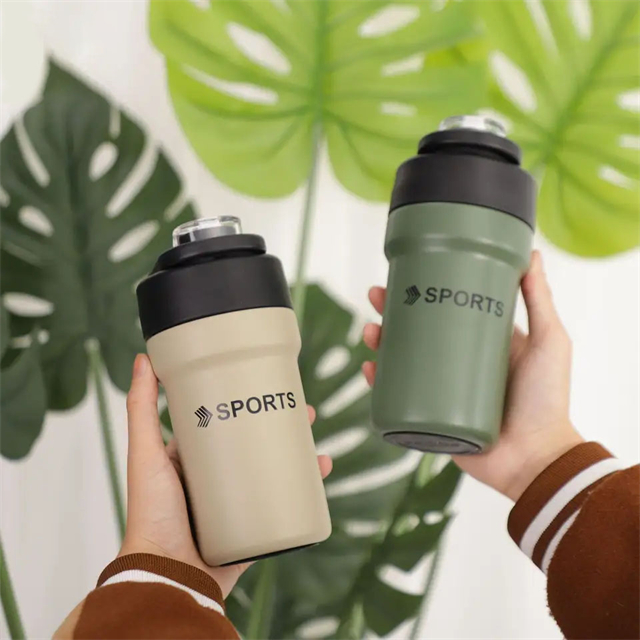
Is a $50 bottle really five times better than a $10 one? The answer lies in longevity and reliability.
Cheap bottles often suffer from poor vacuum seals or thin walls. This leads to condensation, or "sweating," near the neck or base when filled with ice water. This moisture can be destructive, ruining paper documents or electronics inside your bag. A premium bottle should remain completely dry on the outside, regardless of the internal temperature.
The vacuum seal is fragile. A single drop on a hard surface can dent a cheap bottle deeply enough for the inner and outer walls to touch. Once they touch, the vacuum is bridged, and the insulation properties are instantly destroyed. Premium bottles generally utilize thicker steel gauges to resist dents, protecting the integrity of the vacuum over years of rough use.
Be wary of brands claiming "48 hours hot." Unless the bottle is massive, these claims are physically improbable for standard consumer goods. Also, watch out for obscure proprietary technology names that are simply rebranded standard vacuum insulation. Consider the Total Cost of Ownership (TCO). A $40 bottle that lasts five years with replaceable seals is ultimately cheaper than buying four $10 bottles that lose their vacuum or develop moldy lids within a few months.
An insulated water bottle is a remarkable feat of modern engineering, yet it remains bound by the laws of physics. You should realistically expect 12 hours of satisfying heat and 24 hours of ice retention from reputable brands. While marketing claims may reach higher, these benchmarks represent the sweet spot of performance.
When choosing your next vessel, prioritize copper-lined vacuum insulation and insulated lid designs over pure aesthetics. The best bottle is ultimately the one that fits your specific lifestyle—whether that is a heavy-duty tank for cold hydration or a slim, leak-proof vessel for your morning brew.
A: Rapid heat loss usually stems from three causes: a poorly insulated lid, a compromised vacuum seal (damage from dropping), or failure to pre-heat the bottle. If the lid is thin plastic, heat escapes through the top. If the bottle feels hot to the touch on the outside, the vacuum seal is broken.
A: No, it is ineffective. The vacuum insulation that keeps heat in also keeps the cold air of the fridge out. The liquid inside will not cool down significantly. It is better to fill the bottle with cold water and ice directly.
A: Yes. Bottles with a lower surface-area-to-volume ratio retain temperature better. Additionally, bottles with narrow necks (smaller openings) lose less heat than wide-mouth bottles because the "thermal bridge" at the opening is smaller.
A: Perform the "boiling water touch test." Pour boiling water into the bottle and wait 5 minutes. Feel the outside of the bottle. If you feel hot spots or the entire bottle warms up, the vacuum seal has failed, and heat is conducting through the walls.
A: Generally, yes. A heavier bottle often implies thicker gauge steel and potentially a copper lining or getter materials that maintain the vacuum. Ultra-light vacuum bottles may have thinner walls that are more susceptible to denting, which can ruin the insulation.
