


Call Us Now
Phone:
+86-137-2797-2500 
Views: 0 Author: Site Editor Publish Time: 2025-09-17 Origin: Site
Reusable water bottles are a must-have in our daily lives, from workouts to meetings. But how often should we clean them? Many of us forget to clean our water bottles regularly, risking our health.
In this article, we’ll explore why cleaning your water bottle is important, how often to wash it, and the best methods for keeping it clean.
Water bottles are ideal environments for bacterial growth. Over time, moisture, warmth, and organic material can combine to create a breeding ground for harmful bacteria like E. coli and Salmonella. These bacteria can cause gastrointestinal infections and skin issues. Additionally, mold can develop, leading to respiratory problems and allergic reactions if left unchecked. Regular cleaning reduces the chances of this bacterial and mold buildup, ensuring that your hydration is both healthy and safe.
Every time you take a sip, bacteria from your mouth and hands enter the bottle. But it’s not just you who’s introducing germs. Common surfaces like door handles, phones, and even countertops can transfer germs into your water bottle. If you're not careful, you could be ingesting pathogens each time you take a drink. Keeping your water bottle clean helps eliminate these hidden risks.
Using a reusable water bottle helps reduce reliance on single-use plastic bottles, but neglecting to clean your bottle properly can lead to unpleasant odors, mold, and ultimately, an early replacement. By keeping your bottle clean and in good condition, you help extend its lifespan and reduce unnecessary waste.
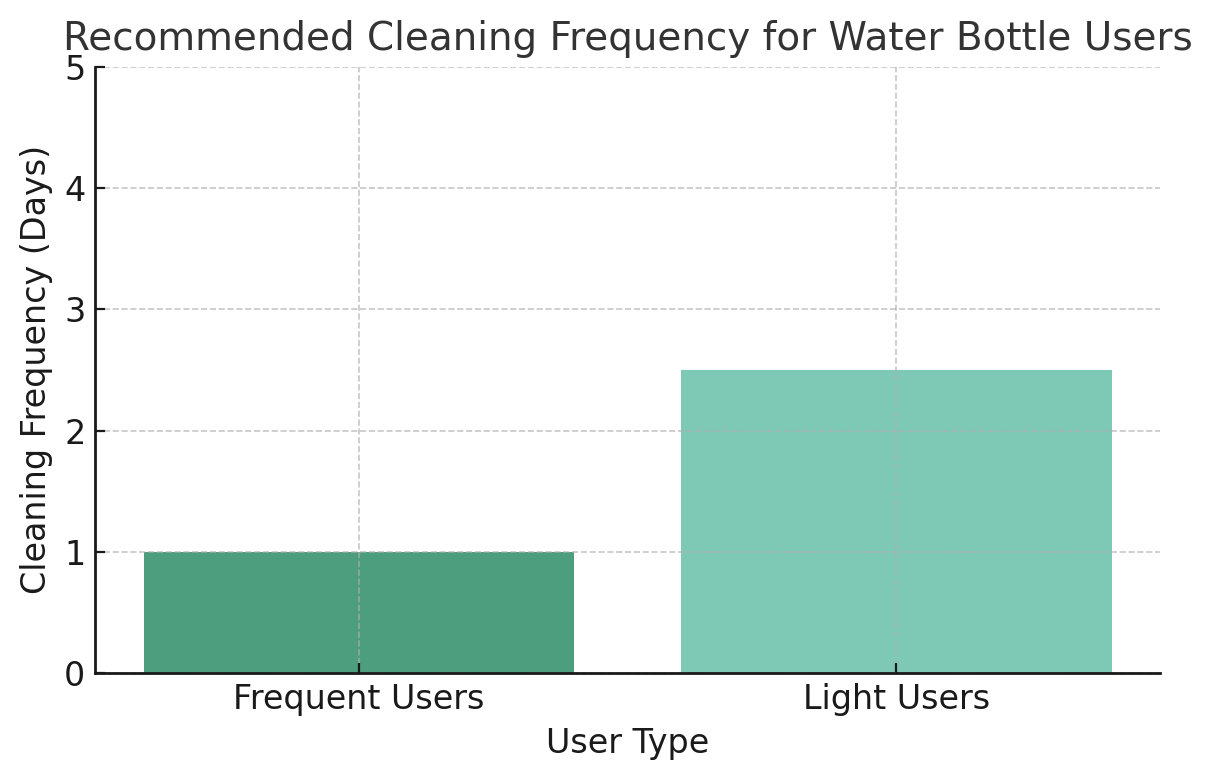
If you're someone who refills your water bottle throughout the day, it’s recommended to clean it daily. The more you use the bottle, the more bacteria build-up can occur. Even if you only drink water, bacteria from your mouth can easily transfer and multiply over time. By washing it daily, you prevent bacterial growth and ensure that your bottle remains odor-free and hygienic.
In certain situations, washing your water bottle more than once a day is essential. For instance, if you use your bottle during workouts, the combination of sweat, body oils, and water creates a favorable environment for bacteria to thrive. Similarly, if you live in a hot and humid climate, or frequently leave your bottle in a car, bacteria can grow faster. In these cases, washing your water bottle after every use can help keep it in top condition.
Note: If your bottle is used for beverages other than water (like juice, tea, or protein shakes), it's crucial to clean it immediately after use to prevent sugar residue or bacteria build-up.
Not all water bottle users drink from their bottles all day long. If you’re someone who takes a few sips here and there, you might wonder how often you should clean it. For lighter use, cleaning your bottle every 2-3 days is generally sufficient. However, if your bottle is left unused for long periods, you should still clean it regularly to avoid potential odor or bacteria accumulation.
The most common sign that your water bottle needs cleaning is an unpleasant odor. This often signals the presence of bacteria or mold inside your bottle. A foul smell can occur even if the bottle is used only for water, as bacteria thrive in the moist environment of the bottle. If you notice a strong smell, it’s time to clean your bottle immediately.
Visible dirt or residue inside the bottle is a clear sign that it’s time for a cleaning session. Even if the bottle is used only for water, dirt from your hands, mouth, or surroundings can easily transfer to the inside. Regularly check for any dirt build-up, especially around the bottle's lid, spout, or bottom, where residue can easily collect.
If you notice that the taste of your water has changed—becoming stale or “off”—this is another sign that bacteria might be growing inside your bottle. Even if the water looks clean, bacteria and biofilms can affect the flavor and safety of your drink. Clean your bottle thoroughly to restore freshness and taste.
The easiest and most effective method for cleaning your water bottle is using soap and hot water. Simply fill your bottle with warm water, add a small amount of dish soap, and scrub the inside with a bottle brush. Pay attention to the spout, lid, and other components, as these areas are often overlooked but can harbor bacteria.
For stubborn odors or biofilm buildup, deep cleaning is necessary. Baking soda and vinegar are great natural cleaning agents, and hydrogen peroxide can also help sanitize your bottle. To deep clean, fill the bottle with warm water and a couple of tablespoons of either baking soda or vinegar. Let it sit overnight, then scrub and rinse thoroughly the next morning.
If your water bottle is dishwasher-safe, using it can be an efficient way to clean your bottle. Just be sure to check the manufacturer’s instructions to confirm it can handle the heat. Place your bottle, lid, and other parts in the top rack, as high heat can cause damage to plastic bottles. This method works well for regular cleaning, but it's not as effective for deep cleaning.
While regular cleaning with soap and hot water is essential, deep sanitization is also necessary. It’s recommended to sanitize your water bottle at least once a week or every two weeks, especially if you use it for beverages other than water. Diluted bleach or hydrogen peroxide are excellent disinfectants that kill any bacteria remaining after your regular cleaning.
After cleaning, make sure your bottle is completely dry before using it again. Bacteria thrive in moist environments, so drying your bottle thoroughly is key to preventing regrowth. If you're sanitizing with hydrogen peroxide or bleach, let the solution sit for at least 10 minutes before rinsing it out thoroughly.
Investing in a bottle brush is crucial for cleaning hard-to-reach areas inside your bottle. You can also use a dishwasher for easy cleaning, but ensure your bottle is dishwasher-safe. A bottle brush helps you clean the spout, lid, and crevices, ensuring that your bottle stays free of bacteria.
Establishing a daily cleaning routine for your water bottle is the best way to maintain good hygiene. Set aside time each day to clean your bottle thoroughly after each use. This will prevent the build-up of bacteria and odors, and ensure your bottle is ready for the next day.
Tip: Set a reminder on your phone to clean your water bottle every evening to make it part of your daily routine.
Encourage family, friends, and coworkers to adopt good water bottle hygiene habits. Remind them to clean their bottles regularly to avoid contamination and bacteria buildup. The more people are aware of the risks, the better it is for everyone’s health.
After cleaning your bottle, ensure it’s thoroughly dried before use. Moisture can promote bacterial growth, so leave the bottle upside down to air dry completely. If you need it to dry quickly, use a clean cloth or towel to help absorb the moisture.
A clean water bottle is essential for maintaining your health. Regular cleaning helps prevent bacterial and mold growth, reduces illness risk, and extends the life of your bottle. By following the recommended cleaning practices and establishing a routine, you can keep your water bottle fresh, safe, and ready for use.
Establish your water bottle cleaning routine today for healthier hydration every day. Binsly offers premium glass water bottles, like this Glass Water Bottle, providing durability and ease of use for your daily hydration needs.
Q: How often should I wash my water bottle?
A: You should wash your water bottle daily, especially if you use it frequently or for beverages other than water. If used less often, clean it every 2-3 days.
Q: Why is it important to clean my water bottle regularly?
A: Regular cleaning prevents bacteria, mold growth, and bad odors. It also ensures that your water bottle stays hygienic, extending its lifespan and reducing health risks.
Q: Can I use my water bottle without cleaning it for a day or two?
A: While occasional use for a day or two may be fine, it’s still important to clean your water bottle regularly to prevent bacterial buildup.
Q: How can I deep clean my water bottle?
A: Use a solution of baking soda, vinegar, or hydrogen peroxide to deep clean your water bottle. Let it soak overnight, scrub thoroughly, and rinse well.
Q: What happens if I don’t wash my water bottle?
A: Not washing your water bottle can lead to bacterial and mold growth, which could cause illness, bad odors, and poor taste.
