


Call Us Now
Phone:
+86-137-2797-2500 
Views: 0 Author: Site Editor Publish Time: 2026-02-11 Origin: Site
You use a cutlery set by selecting the right utensil for each meal and holding it properly. A high-quality, portable option like binsly offers you both style and sustainability. You get sturdy stainless steel pieces with a mirror finish that feel comfortable in your hand. The travel case lets you carry your utensils anywhere, helping you avoid single-use plastics. > Choosing reusable cutlery supports a cleaner environment and makes every meal feel special.
Choose the right utensil for each meal to enhance your dining experience.
Hold your fork and knife correctly for better control while eating.
Practice proper cutlery placement to show respect and improve table manners.
Use reusable cutlery sets to reduce plastic waste and support sustainability.
Learn different dining styles to feel confident in various dining situations.
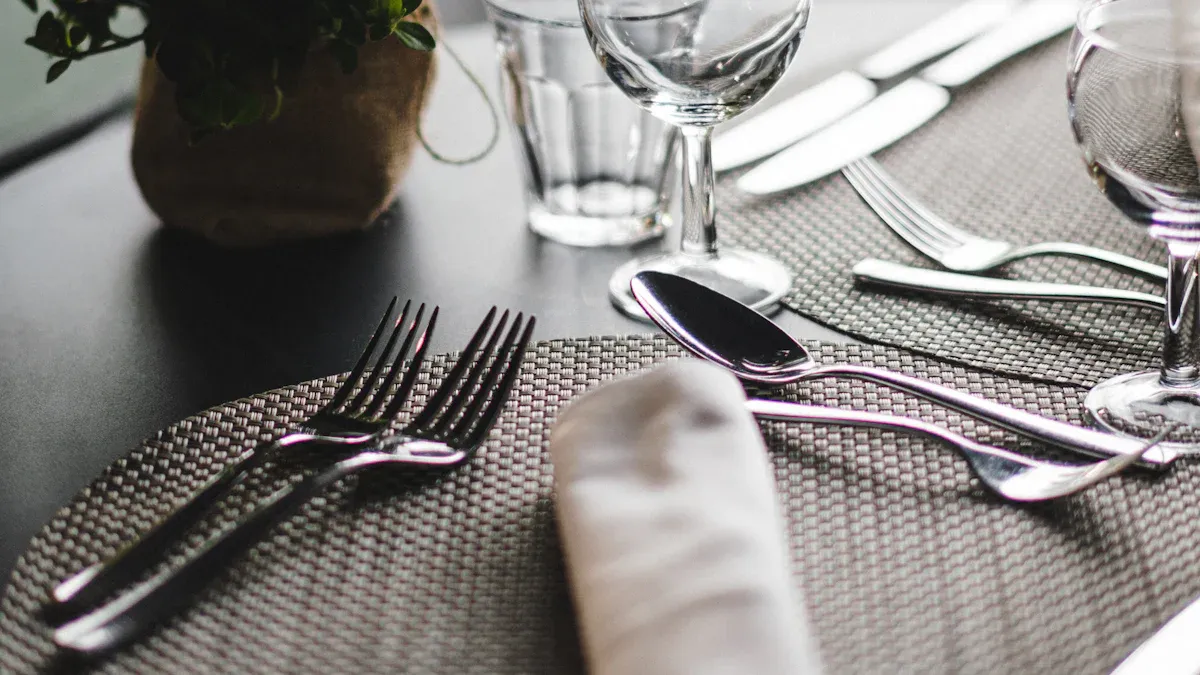
A cutlery set helps you enjoy your meals with ease and style. You find several types of utensils in a standard set. Knowing each piece and where to place it makes your dining experience smoother and more enjoyable. The binsly cutlery set stands out with its gold finish, mirror polish, and ergonomic design. You also get a travel case that keeps your utensils clean and ready for use. Choosing reusable cutlery supports sustainability and reduces plastic waste.
You usually see two main forks in a cutlery set: the dinner fork and the salad fork. The dinner fork is larger and works well for main courses. The salad fork is smaller and fits salads or appetizers. Place forks to the left of your plate. The salad fork sits on the outside, and the dinner fork goes closer to the plate. This arrangement helps you use the right fork for each course.
Dinner fork
Salad fork
Tip: Start with the fork farthest from your plate for the first course.
You find the dinner knife as the main knife in most sets. Some sets include a butter knife for spreading. Place knives to the right of your plate, with the cutting edge facing inward. The dinner knife sits closest to the plate, and the butter knife may rest on a bread plate if present.
Material | Durability | Maintenance | Staining Resistance | Dishwasher Safe | Performance Impact |
|---|---|---|---|---|---|
Stainless Steel | High | Easy | High | Yes | Enhanced balance, weight, and smooth edges |
The binsly cutlery set uses high-quality stainless steel, which gives you durability and a smooth feel.
You usually see two spoons: the teaspoon and the tablespoon. The teaspoon works for stirring drinks or eating desserts. The tablespoon is larger and fits soups or main dishes. Place spoons to the right of the knives. If you have both, the tablespoon sits farther from the plate.
Teaspoon
Tablespoon
A well-arranged table shows respect and attention to detail. You help guests enjoy their meal by placing each utensil in the right spot. The binsly travel case keeps your utensils safe and clean, making it easy to carry them anywhere.
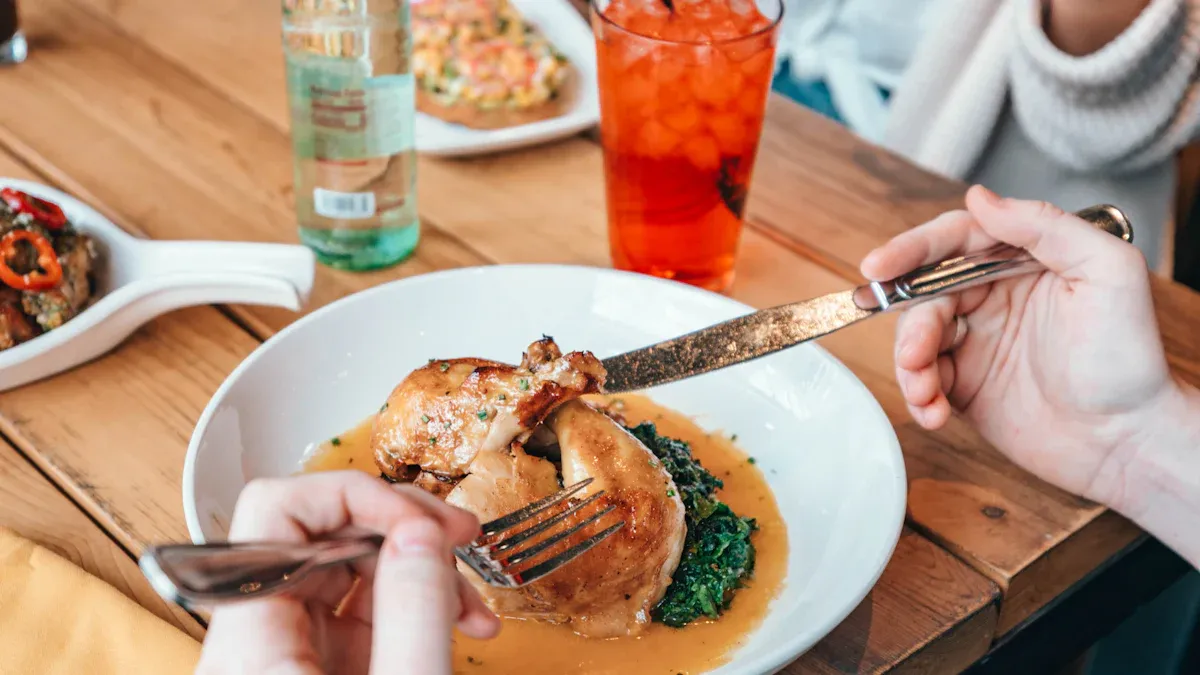
Learning to hold your fork and knife correctly helps you eat with confidence. You start by picking up the fork with your non-dominant hand and the knife with your dominant hand. Place your index finger on the back of each handle for better control. The fork should face downward, and your thumb rests comfortably along the side. This grip gives you stability and makes it easier to cut food.
The binsly cutlery set features an ergonomic design. Each piece fits naturally in your hand, so you feel comfortable during every meal. The balanced weight and smooth handles help you maintain a steady grip, whether you dine at home or on the go.
Step | Description |
|---|---|
1 | Hold the fork in your non-dominant hand and the knife in your dominant hand, with the fork facing downward and your index finger on the back of the handle. |
2 | Cut a piece of food and place the knife down on the top edge of your plate, using the fork to stabilize the food while cutting. |
3 | Switch the fork to your dominant hand, flipping it so the points face up, and hold it like a spoon. |
4 | Use the fork to scoop up food and bring it to your mouth, avoiding spearing food unless necessary. |
5 | When finished, place the fork and knife side-by-side on the plate at an angle, with the fork tines up and the knife next to it. |
Tip: Practice holding your utensils at home to build confidence for formal occasions.
You use your knife and fork together to cut food into bite-sized pieces. Place the food on your plate and hold it steady with your fork. Move your knife in a gentle rocking motion, starting with the tip and moving toward the heel. This method slices food cleanly and keeps your plate neat.
Here are some common cutting techniques you can try:
Slice: Use a rocking motion with the knife to cut through food smoothly.
Bias Slice: Cut longer foods, like bread or vegetables, at an angle for larger pieces.
Mince: Chop herbs or garlic by moving the knife up and down quickly.
Dice: Cut food into even slices, then sticks, and finally small cubes.
Wedges: Cut food in half lengthwise, then into wedge shapes.
Chiffonade: Stack leafy greens, roll them, and slice into thin strips.
The binsly cutlery set has sharp, smooth edges that make cutting easy. The mirror finish helps food slide off the blade, and the balanced handles give you control with every motion. You can use these techniques at home, at work, or while traveling.
Note: Always cut food in front of the fork tines for better control and safety.
You use different spoons for different dishes. For soup, choose a larger spoon with an oval bowl. Hold the spoon in your dominant hand, resting your index finger along the handle for balance. Gently scoop the soup away from you and bring the spoon to your mouth. Avoid slurping for good manners.
For dessert, use a dessert spoon, which is slightly smaller than a tablespoon. Hold it the same way as the soup spoon. If you have a dessert fork, use it in your other hand to help guide food onto the spoon.
Spoon Type | Description | Usage Context |
|---|---|---|
Oval Soup Spoon | Similar in size to a tablespoon but with a smaller bowl and shorter handle. | Used for soup in formal and informal settings. |
Dessert Spoon | Midway in length between a tablespoon and teaspoon, oval-shaped bowl. | Used for dessert in both formal and informal dining. |
The binsly cutlery set includes both soup and dessert spoons. The ergonomic handles make them easy to hold, even for children. The travel case keeps your spoons clean and ready for any meal, whether you are at a picnic or in the office.
Tip: Always use the correct spoon for each dish to show respect for dining traditions.
Dining styles differ around the world. You may notice two main approaches: European (Continental) and United States (American) styles. Each style has its own way of handling cutlery and eating food. Learning both helps you feel confident at any table.
In European dining, you keep the knife in your dominant hand and the fork in your non-dominant hand. The fork tines point downward while you eat. You use both utensils together throughout the meal. You do not switch hands after cutting food. This style looks smooth and efficient.
Dining Style | Cutlery Use Description |
|---|---|
European Dining Style | The knife is held in the dominant hand and the fork in the non-dominant hand, with tines facing downwards while eating. |
Tip: Practice keeping your fork in your left hand and knife in your right hand for the entire meal.
American dining style uses a different method. You start by holding the knife in your right hand and the fork in your left to cut food. After cutting, you place the knife down and switch the fork to your right hand. The fork tines face upward when you eat. This style is sometimes called the "zigzag" method.
Forks:
Salad fork sits farthest left for appetizers.
Dinner fork sits closest to the plate for main courses.
Knives:
Dinner knife sits on the right, cutting edge facing the plate.
Spoons:
Soup spoon sits on the right, farthest from the plate.
Start with the utensil farthest from the plate.
Use the salad fork and outermost knife for the first course.
Work inward with each subsequent course.
Imagine you are at a formal dinner. In European style, you cut your steak and eat each bite without changing hands. Your fork stays in your left hand, tines down. In American style, you cut your steak, set down your knife, and switch your fork to your right hand, tines up, before eating.
If you use a binsly cutlery set, you can practice both styles. The ergonomic handles help you grip each utensil comfortably. Try both methods at home or while traveling. You will feel prepared for any dining situation.
Note: Understanding both styles helps you adapt to different cultures and impress your guests.
Good table manners help you feel confident in any dining setting. You start by using the outermost utensils for the first course and work your way inward as new dishes arrive. Always use the correct fork, knife, or spoon for each course. Engage in conversation between bites and avoid talking with your mouth full. In formal settings, you may see several types of cutlery arranged around your plate. Here is a quick guide:
Cutlery Type | Position/Use |
|---|---|
Soup Spoon | Farthest right, for soups or broths |
Salad Fork | Outer left, smaller than dinner fork |
Dinner Knife | Closest right, for main courses |
Dessert Spoon | Above the plate, for dessert |
Butter Knife | Right side, for spreading butter |
In casual meals, you may only have one fork, knife, and spoon. You still show respect by using them properly and keeping your area tidy.
Tip: Place your napkin on your lap as soon as you sit down.
How you place your cutlery signals to others if you are still eating or finished. When you pause, rest your knife and fork in an inverted V on your plate. To show you have finished, place your fork and knife side by side at the 10 o’clock to 4 o’clock position, with the fork tines facing up and the knife blade facing in. This makes it easy for staff to clear your plate.
Do not cross your cutlery on the plate.
Do not rest utensils on the table.
Fold your napkin and place it to the left of your plate when done.
Many people make small mistakes with cutlery. You can avoid these by following a few simple rules:
Do not wave utensils or point with them.
Avoid resting cutlery on the table between bites.
Never lick or bite your knife.
Use each utensil for its intended purpose.
Do not stack used cutlery on the tablecloth.
For your binsly cutlery set, always hand wash with mild soap and warm water. Dry each piece right away to keep the gold finish bright. Store your utensils in the travel case to prevent scratches and keep them ready for your next meal.
Good etiquette and proper care help your cutlery last longer and make every meal enjoyable.
You can use a cutlery set by following these steps:
In casual settings, place a fork on the left and a knife and teaspoon on the right.
For formal meals, arrange forks on the left and knives and spoons on the right, with dessert utensils above.
Proper cutlery use makes meals look appealing and feel comfortable. You help the environment by choosing reusable sets.
Type of Cutlery | Environmental Benefit |
|---|---|
Metal (Stainless Steel) | Reduces plastic waste in landfills and oceans; highly recyclable. |
Practice these skills for everyday meals and special occasions. You make dining enjoyable and sustainable.
Wash each piece by hand with warm water and mild soap. Dry them right away to keep the gold finish bright. Store your utensils in the travel case to prevent scratches.
Yes, you can. The binsly cutlery set comes with a travel case. You carry it to work, school, or picnics. This helps you avoid single-use plastics.
Hold the fork in your non-dominant hand and the knife in your dominant hand. Place your index finger on the back of each handle. This grip gives you control and comfort.
Start with the utensil farthest from your plate. Use each utensil for its course. Work your way inward as new dishes arrive.
Reusable cutlery sets help reduce plastic waste. You make a positive impact on the environment. They also look stylish and last a long time.
