


Call Us Now
Phone:
+86-137-2797-2500 
Views: 0 Author: Site Editor Publish Time: 2026-01-13 Origin: Site
You want to choose the best Cooking Pots Set for your family, but you might feel overwhelmed by all the options. No worries—you can do this! Cooking should feel fun, not confusing. You only need a clear plan and a few simple steps. Imagine making every cooking moment easier and more enjoyable. Let’s get you set up for delicious meals and happy family times in the kitchen.
Identify your family's cooking style to choose pots that fit your needs. Consider what meals you cook most often.
Select pot sizes based on your family size. Larger families need bigger pots to avoid cooking struggles.
Focus on essential cookware pieces like a stockpot and frying pan. Start with basics and add more as you grow your cooking skills.
Choose durable materials like stainless steel for longevity. Look for pots that can withstand high heat and daily use.
Check for safety features and certifications. Ensure your cookware is free from harmful chemicals for healthy cooking.

Start by thinking about how you cook most days. Do you love making soups, stews, or pasta? Maybe you enjoy frying, steaming, or slow-cooking. Your cooking style shapes the pots you need. If you like to try new recipes, you might want a set with different shapes and sizes. For example, a large stockpot works well for soups, while a smaller saucepan helps with sauces or oatmeal.
Tip: Write down your favorite dishes. This list will help you see what pots you use most often.
You can also ask your family what meals they enjoy. If everyone loves chili or big batches of spaghetti, you need a pot that fits the whole family. If you bake or roast, look for pots that can go from stove to oven. Matching your pots to your cooking style makes every meal easier.
Think about how often you cook at home. If you make family meals every day, you want pots that last and clean up fast. Cooking for a big group means you need larger pots. If you cook just a few times a week, you might not need as many pieces.
Make a quick checklist:
How many people do you cook for each day?
Do you cook breakfast, lunch, and dinner?
Do you like to meal prep or cook in batches?
The answers help you pick the right size for your pots. A small family might need a medium saucepan and a large skillet. A bigger family needs a large stockpot and a few extra pans. The right size makes cooking smoother and saves time.
Remember, the best cooking pots set fits your family’s habits. You want to enjoy cooking, not struggle with pots that are too small or too big.
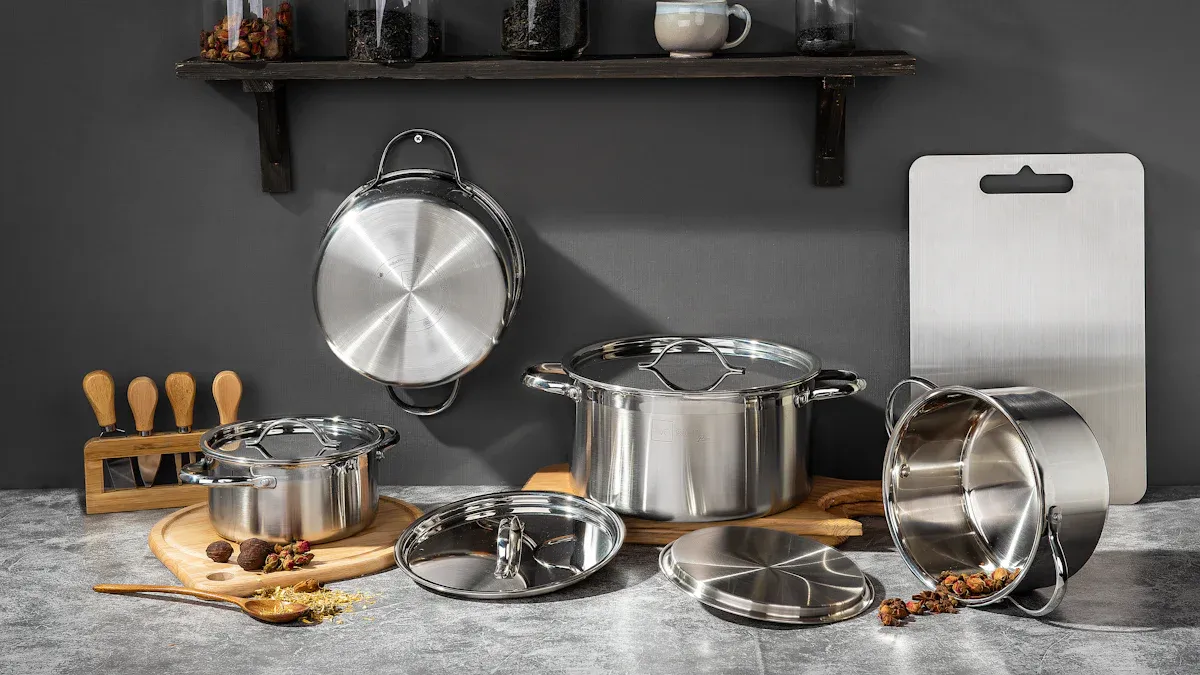
Choosing the perfect pot size can make your cooking experience much smoother. You want pots that fit your family’s needs, not ones that leave you with leftovers spilling over or tiny portions. Start by thinking about how many people you cook for most days. A small family needs different pots than a big group.
Here’s a quick table to help you match pot size to your family:
Family Size | Recommended Pot Size | Capacity (ml) |
|---|---|---|
2-3 people | 18 cm deep frying pan | 1200 |
3-4 people | 20 cm deep frying pan | 1600 |
4-5 people | 22 cm deep frying pan | 2000 |
5-6 people | 24 cm deep frying pan | 2400 |
6-7 people | 26 cm deep frying pan | 3300 |
4 members | 5L Pressure Cooker | N/A |
You can also look at this chart for a visual guide:
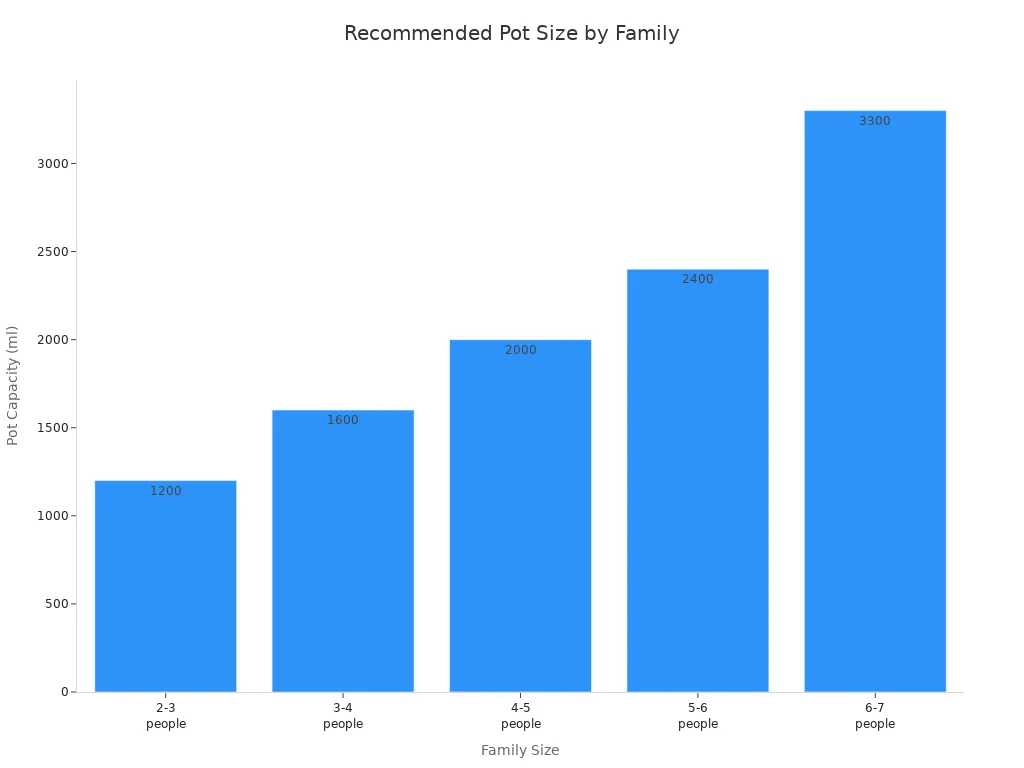
For most family meals, you’ll use pots between 8 and 12 quarts. An 8-quart pot works well for soups or boiling potatoes for 3-5 people. If you cook for a crowd, a 12-quart pot handles big batches of chili or stew. Picking the right size means less stress and more fun while cooking.
You don’t need every pot in the store. Focus on the essentials for daily cooking. Here’s a list to get you started:
A medium saucepan for sauces, oatmeal, or reheating leftovers
A large stockpot for soups, pasta, or stews
A sturdy frying pan or skillet for sautéing and frying
A casserole dish for oven meals and slow cooking
A pressure cooker if you like quick meals
These pieces cover most recipes and help you handle any meal. Stackable sets save space and keep your kitchen tidy. When you choose the right pots, you make every cooking task easier and more enjoyable. The right set gives you confidence and helps you create great meals for your family.
Tip: Start with the basics. You can always add more pots as your cooking skills grow.
Choosing the right cookware material can make your cooking experience much better. You want the perfect cookware for your family, so let’s look at the most popular options. Each type has its own strengths and weaknesses. Picking the right one helps you cook with confidence.
You see many choices when you shop for cookware. Stainless steel, nonstick, and cast iron are the most common. Here’s a simple table to help you compare:
Cookware Type | Advantages | Disadvantages |
|---|---|---|
Stainless Steel | Versatile, rapid heating, non-reactive surface, easy to clean, dishwasher safe | Lacks innate non-stick properties |
Nonstick | Easy food release, simple cleaning, great for low-fat cooking | Coating can wear off, not always oven-safe |
Cast Iron | Excellent heat retention, even cooking, some models do not require seasoning | Requires regular seasoning, heavier than other types |
If you want high-quality cookware that lasts, stainless steel is a great pick. Nonstick pans make eggs and pancakes easy. Cast iron gives you even heat for perfect searing. Think about what you cook most. This helps you choose the perfect cookware for your kitchen.
Tip: Mix and match! You don’t have to stick with one type. Many families use a mix for different meals.
High-quality cookware often uses multi-ply construction. This means layers of metal work together to give you better results. Here’s what you get with multi-ply pots and pans:
Feature | Description |
|---|---|
Construction | Tri-ply stainless steel with aluminum core sandwiched between stainless steel |
Heat Distribution | Ensures even heat distribution and improved temperature control |
Cooking Precision | Reduces hot spots, enhancing cooking precision |
Some perfect cookware sets use 5-ply construction. These have more layers for even better heat control and retention. You get professional-level results at home. Multi-ply pots help you avoid burnt spots and make every meal taste better.
When you pick high-quality cookware with the right material, you make cooking easier and more fun for your family.
You want your pots to last through years of family meals. Start by checking the build quality of each piece. Look for thick walls and sturdy bases. These features help your pots handle high heat and daily cooking without warping or denting. Durable cookware makes your cooking experience smoother and less stressful.
Here are some of the most durable cookware materials you’ll find:
Carbon steel: Extremely durable and lighter than cast iron. Great for high-performance cooking.
Stainless steel: Scratch and dent resistant. Handles high heat and is easy to maintain.
Copper: Heats up quickly and cooks evenly, but can dent easily and costs more.
Take a look at this table to compare your options:
Cookware Material | Pros | Cons |
|---|---|---|
Stainless Steel | Scratch & dent resistant, withstands high heat, easy to maintain | Learning curve, variation in quality |
Carbon Steel | Extremely durable, ideal for high-performance cooking | Not dishwasher-safe, must be seasoned |
Copper | Quick and even cooking, excellent control | Pricey, can dent easily |
When you choose durable cookware, you spend less time worrying about damage and more time enjoying cooking.
Tip: Pick pots with a solid feel. If they seem flimsy or bend easily, they won’t last long.
Handles and lids play a big role in how easy and safe your cooking feels. You want handles that stay cool and feel comfortable in your hand. Lids should fit snugly and help you control heat and moisture.
Check out this table to see how lid materials affect durability and usability:
Lid Material | Durability Features | Usability Features |
|---|---|---|
Glass (Tempered) | Shatter-resistant, withstands high temperatures | Lets you monitor food, easy to clean, silicone grip |
Stainless Steel | Resists warping, does not crack or shatter | Ergonomic handles, snug fit, non-reactive surface |
Choose pots with strong, riveted handles. These handles won’t loosen over time. Lids made from tempered glass or stainless steel give you peace of mind and make cooking easier. When you pay attention to these details, you create a safer and more enjoyable cooking experience for your family.
Remember, sturdy handles and lids help you cook with confidence every day.
Keeping your kitchen routine simple starts with choosing pots and pans that clean up fast. You want to spend more time enjoying meals and less time scrubbing. Let’s look at how different cookware types can make your cleaning process easy.
Non-stick pots and pans make cleaning a breeze. Food slides right off, so you only need a gentle wipe with a soft sponge. You should avoid metal utensils and harsh cleaners to keep the non-stick surface in good shape. Non-stick cookware cannot go in the dishwasher, but you can wash it quickly by hand.
Stainless steel pots need a little more care. Let them cool before washing. Sometimes, you may need to soak them if food sticks. Stainless steel does not like the dishwasher, so hand washing works best. If you want to compare cleaning time and effort, check out this table:
Type of Pot | Cleaning Time and Effort |
|---|---|
Stainless Steel | Requires cooling before washing, may need soaking for tough stains, and should not be put in the dishwasher. |
Nonstick | Avoid acidic foods and nonstick sprays, cannot be washed in the dishwasher, and requires gentle utensils. |
You can see that non-stick pans offer an easy cleaning experience, but you need to treat them gently. Stainless steel gives you a classic look and works well for high-temperature cooking, but it may take a bit more effort to clean.
Tip: If you want to make your cooking experience smoother, rinse your pots right after use. This trick helps prevent stuck-on food.
Busy families love dishwasher-safe cookware. You can toss these pots and pans in the dishwasher and move on with your day. Not all materials work well in the dishwasher, so check the label before you buy.
Here’s a quick guide to help you pick the easiest options:
Cookware Material | Ease of Cleaning | Notes |
|---|---|---|
Stainless Steel | Easy | Non-reactive, great for high-heat cooking |
Cast Iron | Moderate | Naturally non-stick when seasoned |
Glass | Easy | Safe option for roasting and baking |
Enameled Cast Iron/Steel | Moderate | Good for slow cooking, avoid non-stick types |
Stainless steel and glass both clean up easy and handle the dishwasher well. Cast iron and enameled cookware need a bit more care, but they still offer a mostly easy routine if you season or clean them right.
Remember: Always check the manufacturer’s instructions. Some non-stick pans say “dishwasher safe,” but hand washing keeps them in top shape.
Choosing the right cookware means you get more time for family and less time at the sink. Pick easy-to-clean pots and pans to make every cooking day a good one.
When you pick a cooking pots set for your family, safety should always come first. You want to cook with confidence, knowing your pots will not release harmful chemicals or get too hot to handle. Let’s look at two key safety features you should check before you buy.
You want pots that can handle high heat without warping or breaking. Some materials work better than others for family cooking. Here’s a quick table to help you compare:
Material | Heat Resistance Features | Safety Features |
|---|---|---|
Stainless Steel | Handles high heat, does not react with food | Non-reactive, does not leach harmful substances |
Cast Iron | Holds heat well, lasts for years | Adds iron to food, safe if seasoned properly |
Ceramic | Withstands high temperatures, non-reactive | Free from toxic glazes, safe for cooking |
Ceramic Non-Stick | Safe at high heat, no toxic fumes | Made from natural materials, non-toxic |
Silicone Non-Stick | Non-stick without chemicals, safe for most cooking temperatures | Food-grade, BPA-free, safe for cooking |
You can see that stainless steel and cast iron both give you strong heat resistance. Ceramic and silicone non-stick options also keep your food safe at high temperatures. Always check the handles, too. Look for pots with heat-resistant handles so you can move them safely, even when they’re hot.
Tip: If you cook on high heat often, choose pots that say “oven-safe” or “high-heat safe” on the label.
You want to avoid pots with harmful chemicals in their coatings. Some non-stick pans use chemicals that can release fumes or leach into food. Always check for safety certifications before you buy. Here’s a table to help you spot safe cookware:
Certification | What It Means |
|---|---|
FDA Certification | No PFOA in non-stick coatings; follows strict safety rules |
German LFGB Certification | Tests for heavy metals and safe materials |
Food Grade Stainless Steel | Marked with ‘GB9684’ and ‘304/316’ for safe use |
PFAS-Free Non-Stick | No PFAS chemicals; safer for your family |
Food-Grade Silicone | BPA-free, tested for safe cooking |
Look for labels like “PFAS-free,” “FDA certified,” or “LFGB certified.” These show the pots passed important safety tests. For stainless steel, check for “304” or “316” markings. For non-stick, avoid anything with PFOA or PFAS.
Note: Safe cookware keeps your meals healthy and your family protected. Always read the label before you buy.
By checking these safety features, you make sure your new pots help you cook healthy, delicious meals every day.
Choosing the right brand can make a big difference when you shop for cooking sets. You want to feel confident about your purchase. Let’s break down how you can compare brands and make the best choice for your family.
Start by reading what other families say about their cookware. Reviews and ratings give you real-life feedback. Look for comments about how the pots hold up over time, how easy they are to use, and if they match the description. Families often care about a few key things when they read reviews:
Factor | Description |
|---|---|
Cost | The price of the cookware is a primary concern. |
Quality | Families look for high-quality materials. |
Material | The type of material used is crucial for safety. |
Aesthetics | The visual appeal of cookware matters to families. |
You should also check for these points:
Durability for everyday cooking
Safety of materials (non-toxic and chemical-free)
How easy the pots are to clean
If you see lots of positive reviews about durability and safety, that’s a good sign. You want cookware that lasts and keeps your family safe.
Tip: Look for reviews that mention how the cookware performs after months of use, not just right out of the box.
A good warranty shows that a brand stands behind its products. You want peace of mind if something goes wrong. Here’s a quick look at how top brands compare:
Brand | Warranty Period | Customer Support Policy |
|---|---|---|
T-fal | Limited lifetime warranty | Products are not repairable; international guarantee varies. |
All-Clad | Lifetime warranty available | Emphasizes commitment to quality and customer service. |
Check the warranty before you buy. Some brands offer a lifetime warranty, while others have limited coverage. Good customer support means you can get help if you have questions or problems. You want a brand that answers quickly and helps you solve issues.
Note: A strong warranty and helpful support make your purchase worry-free.
When you compare cooking sets brands, you make a smart choice for your kitchen and your family.
You want great cookware, but you also want to stick to your budget. Finding the right balance between cost and quality helps you get the most value for your money. You do not need to buy the most expensive set in the store. You can find high-quality pots and pans at different price points.
Here are a few tips to help you balance cost and quality:
Think about your budget before you shop. Set a number that feels comfortable for your family.
Remember that quality cookware is an investment. Good pots last for years and save you money in the long run.
Look for trusted brands like Hestan and All-Clad. These brands offer products at many price levels, so you can find something that fits your budget.
Check for sales or bundles. Sometimes you can get a better deal on a set than buying each piece alone.
Tip: You do not need to buy everything at once. Start with a few good pieces and add more as you go.
You do not need every pot and pan in the store. Focus on the essentials first. These pieces help you cook almost any meal for your family. When you invest in the basics, you build a strong foundation for your kitchen.
Most families find these pieces most useful:
Cast iron skillet
Large (10–12 inch) stainless steel skillet
Large (10–12 inch) nonstick skillet
Small or medium (8–10 inch) nonstick skillet
Large (6–12 quart) stockpot
Medium (3–4 quart) stainless steel stockpot
Small (1–1.5 quart) saucepan
Dutch oven
Baking sheets
9×13 baking dish
Start with these essentials. You can cook almost anything with them. As your cooking skills grow, you can add more pieces to your collection.
Note: Investing in the right essentials saves you money and makes cooking easier every day.
You want your new high quality cooking pots set to work with your stove. Not every pot fits every stove. Some pots only work with gas or electric. Others work with induction. If you have an induction stove, you need pots that use magnetic materials. This helps the pot heat up fast and gives you better control over your cooking.
Here’s a quick table to help you see which pots match your stove:
Cookware Type | Compatible Stoves | Key Features |
|---|---|---|
Stainless Steel | Gas, Electric, Induction | Heat resistance, even heat distribution |
Titanium-fused Nonstick | Gas, Electric, Induction | Nonstick surface, durable |
Cast Iron | Gas, Induction | Excellent heat retention, versatile cooking |
Carbon Steel | Gas, Induction | Quick heating, lightweight |
Hard-anodized Aluminum | Gas, Electric | Durable, good heat conduction |
Pure Aluminum | Electric | Lightweight, not for induction |
Copper | Electric | Great heat conductivity, not for induction |
If you want the best heat for your recipes, stainless steel and titanium-fused nonstick work on almost any stove. Cast iron and carbon steel give you strong heat and let you control the temperature well. Hard-anodized aluminum heats up fast but does not work on induction. Copper and pure aluminum only fit electric stoves. Always check the label before you buy. This step saves you time and money.
Tip: If you plan to switch stoves in the future, pick pots that work on all types. You will not need to buy a new set.
Weight matters when you cook for your family. Heavy pots hold heat longer and give you steady control. You can simmer soups or stews without burning. Light pots heat up fast but may not keep the heat steady. If you want to move pots from stove to oven, check the weight first.
Here’s how to choose the right weight:
Try lifting the pot in the store. Make sure you can carry it when full.
Heavy pots like cast iron give you great heat retention. They help you control the cooking process.
Lighter pots work well for quick meals and easy cleanup.
If you have kids or older family members, lighter pots may feel safer.
You want a balance. Pick a set with both heavy and light pieces. Use heavy pots for slow cooking and light ones for fast meals. This mix gives you the best heat and control for every recipe.
Note: Always test the handles. Good handles help you lift heavy pots safely, even when they are hot.
You are almost ready to buy your new stainless steel cooking pots set. Before you finish, take a moment to double-check the features. This step helps you get the best cookware for your everyday cooking needs and ensures you see superior cooking results every time.
Here are the top features you should review:
Material types: Stainless steel gives you durability and even heat. Non-stick makes food release easy. Ceramic helps you cook healthy meals.
Size options: Small pots (1-2 quarts) work for single servings. Medium pots (3-5 quarts) fit family meals. Large pots (6+ quarts) help with batch cooking.
Specific features: Vented glass lids let you watch your food. Ergonomic handles feel comfortable and safe. Integrated strainer inserts make draining simple.
Check each pot in your set. Make sure the handles feel sturdy and the lids fit well. Look for pots that match your cooking style and give you consistent results. If you want the best cookware, these features matter for performance and safety.
Tip: Hold each pot if you can. You want pots that feel balanced and easy to use for all your recipes.
Before you buy, review the return policies for your kitchen cooking pots set. Good return policies protect you if the pots do not meet your expectations or if you find a defect. Major retailers like Le Creuset and T-fal offer clear policies:
Retailer | Return Period | Conditions |
|---|---|---|
Le Creuset | 45 days | Original receipt required; defective items may be returned without shipping fees. |
T-fal | 45 days | Easy returns; specific conditions apply for defective items. |
You can return your pots within 45 days at both stores. Keep your receipt for a smooth process. If you find a problem with your cooking pots, these brands help you get a replacement or refund. This step gives you peace of mind and helps you focus on getting the best cookware for your kitchen.
Note: Always check the store’s website or ask customer service about the return policy before you buy. This way, you know what to expect if you need to return your pots.
When you double-check features and review return policies, you set yourself up for great performance and consistent results. You will enjoy your new cooking pots set and see better results in every meal.
You made it through all 10 steps! When you follow this guide, you set yourself up for a confident cookware purchase. Families who use a step-by-step process often see these benefits:
You pick pots that match your lifestyle and maintenance needs.
Stainless steel gives you flexibility for many recipes.
Quality cookware lasts longer and makes cooking more fun.
Trust your choices. You know what your family needs. Enjoy every meal together with your new cooking pots set!
You want a large stockpot. It helps you cook soups, pasta, and stews for your family. This pot gives you the most versatility for everyday meals.
Check the label or bottom of the pot. Look for symbols that match your stove type. If you see “induction compatible,” you can use it on any stove.
Yes, you can mix materials. Many families use stainless steel, nonstick, and cast iron together. This way, you get high-performance products for every recipe.
Wash your pots right after cooking. Use soft sponges and avoid harsh cleaners. Dry them well before storing. This keeps your cookware shiny and ready for the next meal.
Start with a few essential pieces. Add more as you cook new recipes. You do not need a huge set right away.
