




Call Us Now
Phone:
+86-137-2797-2500 
Views: 0 Author: Site Editor Publish Time: 2025-09-25 Origin: Site
Cooking utensils
Frying pan
Camp stove
Plates, drinkware, forks, and knives
Bowls and spoons for different meals
Portable table
Pick enamel dishes because they last long, are light, and easy to wash. Do not use glass at campsites because it is not safe. Our company says you should use important Camping Cooking Gear to help you stay neat and cook without worry.
Begin your camping cooking kit with important things like a camp stove, pots, and utensils. These main items help you cook outside easily and have fun.
Pick strong and light materials for your cooking tools. Enamel dishes and hard-anodized aluminum pots work well for camping.
Plan your cooking tools by thinking about your group size and how long you will camp. Bigger groups need larger coolers and more cooking things.
Use dinnerware you can use again to make less trash and save money. This is better for nature and helps keep your campsite tidy.
Always look at your packing list before you go. This makes sure you bring everything you need for a good camping trip.
A camp stove or grill is very important for cooking outside. You need a good heat source to make food at your campsite. Many people like the Coleman Classic Two Burner Stove. It is cheap, strong, and lets you cook two things at once. The wind barrier helps you cook when it is windy. Other stoves people use are the BioLite CampStove 2+, Jetboil Genesis 2-Burner, and Ignik FireCan Portable Fire Pit. Here is a table to compare them:
Camp Stove/Grill | Features | BTU Output |
|---|---|---|
BioLite CampStove 2+ | Compact, wood-fueled | 10,000 BTU |
Jetboil Genesis 2-Burner | Auto ignition, wind protection | 10,000 BTU |
Coleman Xcursion 1-Burner Butane | Affordable, portable | N/A |
Ignik FireCan Portable Fire Pit | High BTU output | 20,000-30,000 |
Zempire 2-Burner DLX Wide | Leg levelers, auto ignition | N/A |
Pick a stove or grill that fits your group and needs. A good stove makes cooking at camp easier and safer.
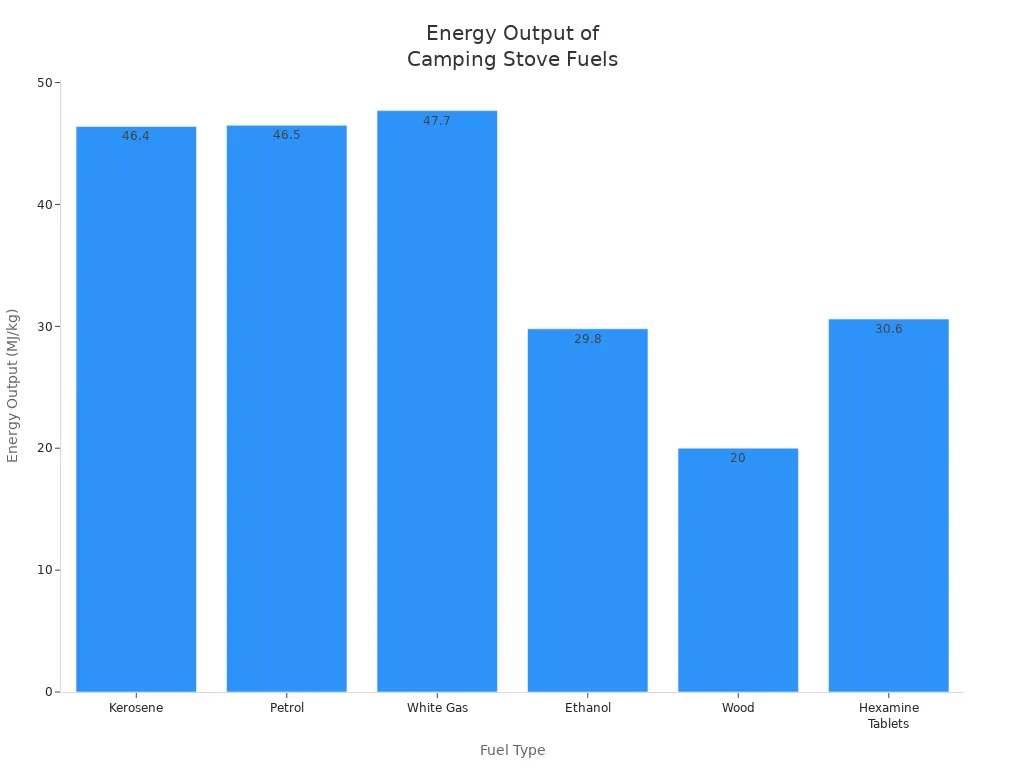
You need fuel to run your stove or grill. Propane is the most popular fuel for camping. It is easy to find and simple to use. Charcoal is good for grills and gives food a smoky taste. Other fuels are white gas, wood, and hexamine tablets. Here is a chart that shows how much energy each fuel gives:
Most beginners should use propane or butane. These fuels are safe and easy to buy. Always bring enough fuel and check your list before leaving.
Pots and pans are needed for cooking at camp. You use them to boil water, make soup, or fry eggs. The best pots and pans are made from hard-anodized aluminum, titanium, or stainless steel. Hard-anodized aluminum does not dent or scratch easily and heats food well. Titanium is very light but can burn food if you are not careful. Stainless steel is strong and works over a fire, but it is heavy.
Material | Durability | Weight | Cooking Performance |
|---|---|---|---|
Hard-anodized aluminum | High | Moderate | Excellent heat distribution |
Titanium | Moderate | Very light | Best for boiling water |
Stainless steel | Very high | Heaviest | Durable, can discolor near flames |
Pick pots and pans that are easy to pack and fit your needs.
Cooking utensils help you make and serve food. You need a spatula, metal tongs, ladle, and dish towels. These tools make cooking safer and easier. Metal tongs help you turn food on the grill. A spatula is good for stirring and serving. Dish towels help keep things clean. Strong utensils last longer and work better outside.
Tip: Bring utensils that are simple to wash and store. Stackable sets help save space in your gear.
A sharp knife and a strong cutting board are needed for cooking at camp. You use them to cut vegetables, slice meat, and get snacks ready. Pick knives with handles that are easy to hold and blades that do not rust. Bamboo and polypropylene boards are easy to clean and last a long time. Some boards lock together to save space. Choose a knife with a cover to keep it safe.
Feature | Description |
|---|---|
Materials | Bamboo, polypropylene for durability and easy cleaning |
Compact Storage | Locking design for secure, compact storage |
Ergonomic Design | Textured handle grip for safe handling |
Corrosion Resistance | Stainless steel blades for long-lasting use |
Dishwasher Safe | Easy to clean after use |
You need a bottle or can opener to open cans and drinks. A multi-tool is even better for camping. It can open cans, cut rope, fix gear, and carve wood. Some multi-tools have up to 18 tools, like knives, pliers, and screwdrivers. This makes your gear more useful and saves space.
Fix broken gear
Cut rope and straps
Open bottles and cans
Make wood shavings for fire
Do bushcraft jobs
Reusable dinnerware is important for camping. Plates, bowls, cups, and utensils made from metal or strong plastic last longer than throwaway ones. Using reusable items makes less trash and helps nature. You also save money because you do not need to buy new things every trip.
Benefit | Impact |
|---|---|
Diverted Trash | 3,128 pounds |
Carbon Dioxide Avoided | 7,364 kg (like 596 cars off the road for a day) |
Water Saved | 14,054 gallons (over 200 bathtubs) |
Reusable dinnerware helps you camp in a way that is good for the earth and keeps your kitchen tidy.
Pot holders or grabbers keep your hands safe from hot pots and pans. Silicone covers and cloth holders give good grip and protect from heat. The Amazon Basics Silicone Hot Skillet Handle Cover lasts over 30 seconds in heat and is safe for ovens. The Pratico PratiPad Plus gives a strong grip and works well outside. Always bring pot holders to avoid burns.
Great insulation
Safe grip for hot pans
Good for outdoor use
A cooler keeps your food cold and safe to eat. For a short trip, use a cooler that holds 30 to 40 quarts. You can also use two small coolers to keep drinks and food apart. This helps keep things cold longer. Stackable containers help you organize your kitchen gear. Always check your list to make sure you have enough space for your food.
30-40 quart cooler for short trips
Two small coolers for better cooling
Stackable containers for easy packing
A mess kit has what you need for eating and cleaning. Most kits have pots, pans, plates, bowls, cups, and utensils. Some kits also have sponges and towels. A good mess kit has all your cooking needs and keeps your kitchen neat.
Essential Items | Description |
|---|---|
Pots or Pans | For cooking meals |
Cooking Utensils | Spoons, spatulas for food prep |
Plates and Bowls | For serving and eating |
Cups | For drinking beverages |
Eating Utensils | Forks and knives for eating |
Fire starters and lighters help you light your stove, grill, or campfire. You need good fire starters for your cooking gear. Some work even when wet and burn for a long time. The FireFlame starter burns for five minutes and is waterproof. Superior Trading Co Light a Fire burns for up to 14 minutes and works in wind.
Fire Starter | Best For | Burn Time | Waterproof | Key Features |
|---|---|---|---|---|
Pyro Putty | Best Fire Starter | N/A | N/A | N/A |
FireFlame | Survival | 5 min | Yes | Lights wet or dry, natural materials |
Superior Trading Co Light a Fire | Camping | 14 min | No | Long burn, wind performance |
Eco-Stix Fatwood | Natural Fire | N/A | N/A | N/A |
Exotac fireROD | Ferro Rod | N/A | N/A | N/A |
Prepared 4x Firestarter | Backup | N/A | N/A | N/A |
Pack fire starters and lighters so you can cook safely and easily.
Note: Always check your kitchen checklist before your trip. This helps you remember everything and makes packing simple.
You should think about how many people will join your trip and how long you plan to stay outdoors. If you camp with a large group or for several days, you need a bigger cooler to store food and drinks. A collapsible sink, like the SOL Flat Pack, helps you wash dishes for many people. For short trips or small groups, you can use a small hand-held cooler and compact kitchen gear. This makes packing and carrying easier.
Large cooler for big groups or long trips
Collapsible sink for washing dishes
Small cooler for short trips or fewer people
You want to keep your camping cooking gear light and easy to carry. Ultralight stoves, such as canister or alcohol stoves, save space and weight. A titanium mug or minimalist cook pot can serve many purposes, so you pack less. Dehydrated and freeze-dried foods are light and take up little room. These foods also give you many meal choices, like pasta or curry. You can make your own dehydrated meals at home to save money.
Tip: Choose pots and pans that match your group size. Titanium and aluminum cookware are strong and light. Compact stoves that use isobutane or propane work well for most campers.
Your cooking style and meal plan decide what gear you need. If you go car camping, you can bring more food and bigger equipment. Car camping lets you use larger stoves and coolers. Backpacking needs light, non-perishable foods and simple gear. You should pick cooking tools that fit your trip. Think about the type of fuel, how easy it is to carry, and if the gear can handle bad weather.
Camping Style | Gear Needed | Food Options |
|---|---|---|
Car Camping | Larger stove, cooler | Fresh, perishable |
Backpacking | Ultralight stove, mug | Dehydrated, compact |
You can build a good kitchen kit without spending much. Buy a durable spork, like the Tito Ti long spork, for under $8. Reuse fuel canisters with a transfer device, such as FlipFuel, which costs about $17. A basic camping cooking kit can cost around $52, much less than some high-end kits. Look for deals and reuse items when you can.
Buy durable utensils instead of plastic
Reuse fuel canisters to save money
Build your kit for less than $60
You want your camping cooking gear to be neat and easy to find. Use soft-sided organizers for light things like collapsible bowls. Choose cookware that fits inside itself to save space. Stackable crates help you store gear on top of each other. Clear bins let you see what is inside right away. Drawer systems make it easy to grab what you need fast. When you make your packing list, put items into groups for cooking, eating, and cleaning. This helps you pack and unpack quickly.
Tip: Put pots, pans, and utensils inside each other to save space. Label bins so you always know where things belong.
You can keep your camp kitchen tidy with a few smart ideas. Magnetic strips hold metal utensils and spice jars off the table. This keeps them close by. Hanging organizers are good for small things and can hang from trees or your car. Use old containers for matches or tea bags and label them for quick use. Custom inserts help you fit storage to your kitchen gear. These tricks keep your cooking area neat and help you find things fast.
Storage Solution | Best Use | Benefit |
|---|---|---|
Magnetic strips | Utensils, spices | Easy access |
Hanging organizers | Small gear, toiletries | Saves table space |
Clear bins | All kitchen items | Quick visibility |
Stackable crates | Bulkier gear | Vertical storage |
You can keep your kit light and still have what you need. Pick cookware that fits together and does more than one job. A spork or a mug that is also a bowl means you need fewer tools. Lightweight gear like the MSR PocketRocket 2 Stove and Sea to Summit Alpha Light Spork helps you carry less. Pack smart by filling every space and only bringing what you need. This makes your kitchen easy to carry and keeps your bag light.
Remember: A lighter kit is easier to move and set up at camp. Always check your packing list before you leave.
When you want to make your campsite feel more like home, you can add a few extra camping kitchen supplies. These items help you cook better meals and enjoy your time outdoors. You do not need them for every trip, but they can make your camp kitchen more comfortable.
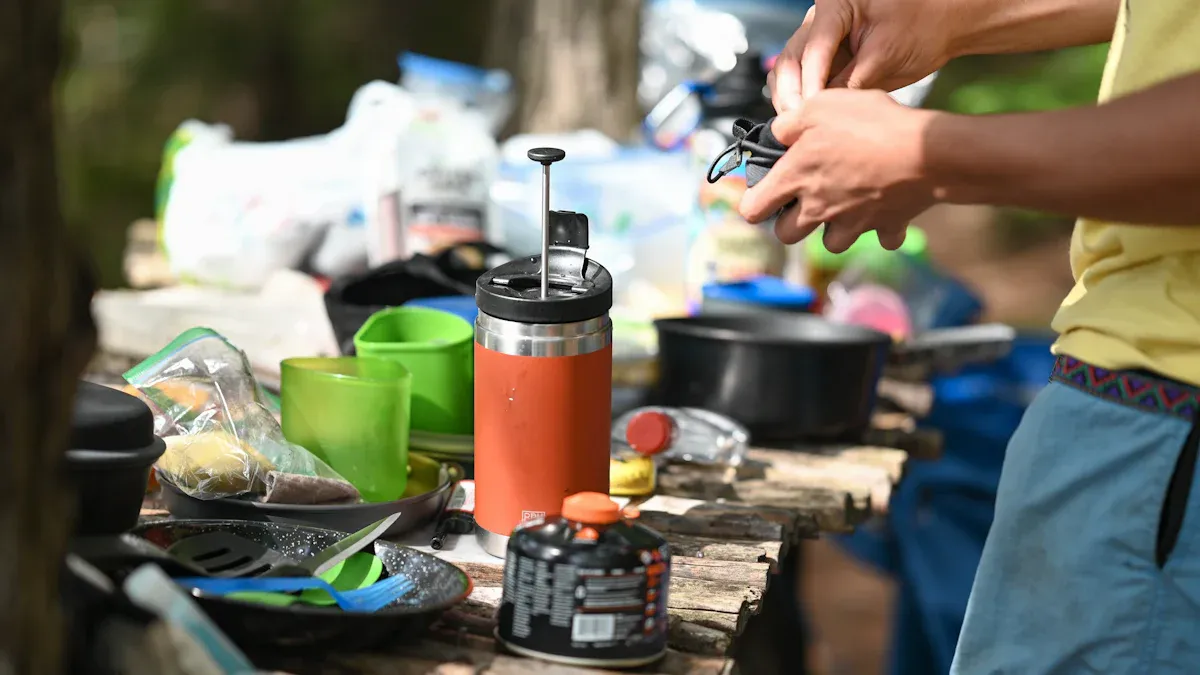
If you love coffee or tea, you should bring special gear for brewing. Many campers use a portable coffee maker, like the Miir Pourigami or Jetboil Silicone Coffee Press. These devices are small and easy to pack. The ESPRO Ultralight Travel Press Bottle fits in most backpack pockets and keeps drinks hot. You can also use a French press or a simple pour-over device. Insulated mugs help keep your drinks warm while you relax at camp. A good coffee setup can make your mornings better.
Tip: Choose a coffee maker that matches your brewing style. Some models work best for groups, while others are perfect for solo campers.
You can bring a small spice kit to add flavor to your meals. Fill tiny containers with salt, pepper, garlic powder, or chili flakes. Many campers use stackable jars or old pill bottles for spices. Pack your favorite sauces in leak-proof bottles. A simple spice kit helps you cook tasty food and keeps your camping kitchen supplies organized.
Spice Kit Item | Use |
|---|---|
Salt & Pepper | Basic seasoning |
Garlic Powder | Adds flavor |
Chili Flakes | Spicy kick |
Soy Sauce Packets | Easy to carry |
You can set up an outdoor cooking table to make meal prep easier. Folding tables give you space for chopping, mixing, and serving food. Many campers use lightweight tables that fold flat for easy transport. Bring camp chairs or stools for comfort while you eat. A sturdy outdoor cooking table helps you keep your kitchen gear off the ground and makes cooking safer.
Folding table for food prep
Camp chairs for relaxing
Table keeps gear organized
If you want to grill at camp, you can add special tools to your camping kitchen supplies. Bring a grill rack, griddle, or Dutch oven for different cooking styles. Marshmallow and hot dog roasting forks make campfires more fun. Pack extra charcoal or fuel for your grill. Use small food-storage containers and foil to keep ingredients fresh. These accessories help you try new recipes and enjoy outdoor meals.
Note: Optional camping kitchen supplies add comfort and variety to your camp kitchen. You can choose what fits your style and trip needs.
You need to keep your camping kitchen clean to stay healthy and enjoy your meals. Bring biodegradable soap for washing dishes. This type of soap breaks down quickly and does not harm the environment. Multi-use cleaning products help you clean pots, pans, and surfaces. You should always wash your dishes and food prep tools after each meal. Clean tools prevent germs and keep your food safe.
Essential cleaning supplies for your camp kitchen:
Biodegradable soap for dishes
Multi-use cleaning products
Scrub brush or sponge
Microfiber towel for drying
Small basin or collapsible sink
Tip: Clean dishes right after eating. This makes cleanup easier and stops food from sticking.
You want your camping kitchen gear to last for many trips. Always clean and dry your gear before you put it away. Wet items can grow mold or rust. Store your gear in a cool, dry place to protect it from moisture. Use strong containers that can handle bumps and weather. Wipe out storage bins with a cleaning solution to keep them fresh. You can add desiccants, like silica gel packs, to control moisture inside bins.
Best practices for storing camping kitchen gear:
Clean and dry all items before storage
Store in a cool, dry area
Use durable containers
Wipe bins with cleaning solution
Add desiccants to control moisture
Note: Check your gear before each trip. This helps you spot damage early and keeps your kitchen kit ready to use.
You help protect nature when you follow Leave No Trace principles during camping. Always dispose of waste properly. Pack out all trash and leftover food. Never leave scraps or wrappers behind. Wash dishes and yourself at least 200 feet away from lakes and streams. This keeps water clean for wildlife and other campers.
Key Leave No Trace tips for your camp kitchen:
Dispose of waste properly
Pack it in, pack it out
Wash dishes away from water sources
Remember: You make a big difference by keeping your campsite clean and respecting the outdoors. Responsible campers leave nature as they found it.
Make sure you bring all the important things for your camping kitchen. These items help you cook food, eat meals, and clean up easily. Use this checklist to get ready for your camping trip:
Camping stove and fuel (propane or charcoal)
Lighter, matches, or firestarter
Pots (small and medium) with lids
Pan (small and medium) with lid
Pot holders or grill gloves
Stirring spoon and spatula
Grilling tongs and metal turner
Chef’s knife and paring knife (with sheath)
Cutting board
Plates and bowls
Mugs for hot drinks
Water bottles
Utensils (forks, spoons, knives)
Can opener and bottle opener
Corkscrew
Grill rack
Cooler with ice
Food storage containers
Aluminum foil and plastic bags
Dish soap (biodegradable)
Sponge and scrub brush
Dishwashing tub or collapsible sink
Washcloths and towels
Paper towels
Garbage bags
Tip: Mark off each thing as you pack it. This helps you remember everything and keeps your kitchen neat.
You can bring some extra things to make your camp kitchen nicer. These items add comfort and make eating outside more fun:
Portable coffee maker or French press
Coffee grinder for fresh grounds
Outdoor-friendly wine glasses or tumblers
Spice kit and favorite condiments
Camp table and folding chairs
Grilling accessories (roasting forks, Dutch oven)
Insulated mugs for hot or cold drinks
Extra cutting board for snacks
Small food scale for meal prep
Reusable straws and napkins
Note: You do not need these extra items, but they can make camping better and more fun. Pick what works best for your trip and what you like.
You now know how to build a beginner-friendly camping cooking kit. Start with the basics, then add items that match your trip and taste. The right camping cooking gear lets you prepare many types of meals and makes cooking outdoors easy. You can turn each meal into a fun part of your adventure. Use the checklist to pack with confidence and enjoy every moment at camp.
You need a camp stove or grill. This tool lets you cook food safely and easily outdoors. Without it, you cannot prepare hot meals at your campsite.
You should use a cooler with ice packs. Pack perishable foods tightly. Keep the cooler in the shade. Open it only when needed.
Tip: Use two coolers—one for drinks, one for food.
You can use them, but camping cookware works better. Camping pots and pans are lighter and more durable. They pack easily and resist damage from outdoor use.
You need biodegradable soap, a scrub brush, and a small basin. Wash dishes away from streams and lakes. Dry everything before packing.
Item | Use |
|---|---|
Soap | Cleans dishes |
Scrub brush | Removes food |
Basin | Holds water |
